Black Radical Reflections · № 020 · 15 June 2026
Writing Was Never Content
Influencers Encourage Stealing, Algorithms Reward Shallowness, and Schools Have Stopped Teaching Depth. The Case For Writing As Thinking
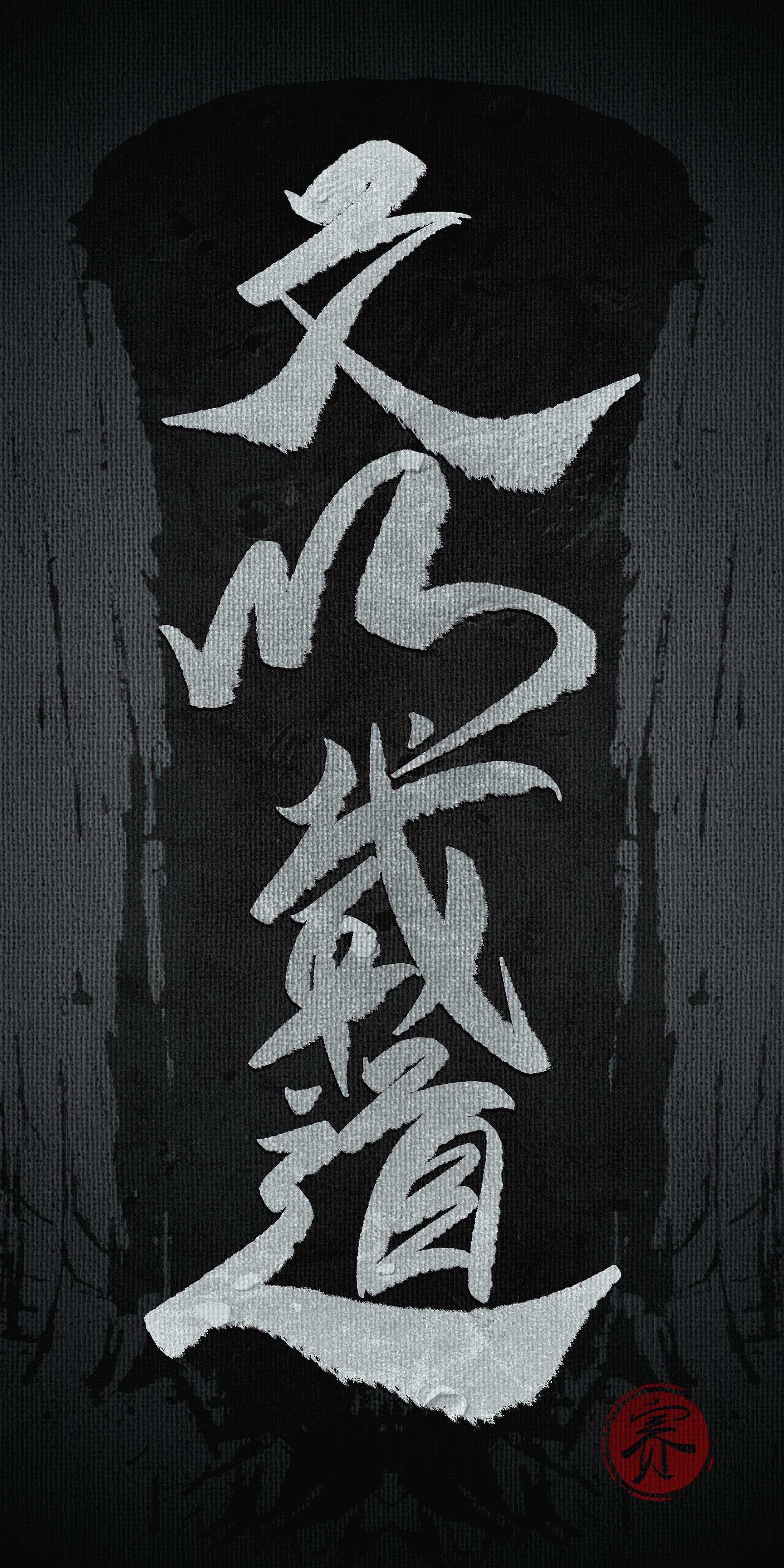
文以载道
wén yǐ zài dào),
writing carries the Way/principle.
I’ve been hearing quite a few influencers say that writing has to be “dumbed down” so that it can be easily digestible for the average person. The idea is basically that the average person can’t understand complex topics and if they become confused or are challenged to think critically they’ll just choose to disengage instead. They deliberately discourage people from creating any kind of long form content. They’ve explained that their reasoning is that the common person is impatient, doesn’t like to read, and doesn’t ever want to listen to someone talk for an hour. Some say that the average person just doesn’t have time. The reality is that most people have the time but they spend it doing other things.
And as if that reasoning and advice wasn’t bad enough, they also go on to say things like, “don’t be original”. “Steal!” Yes, you read that right. They suggest stealing other people’s work and just having AI rewrite. “You don’t need to be authentic”, they say. Then they proceed to showing their audiences how to effectively steal other writers’ work and make money from it. This approach not only fails both the reader and the writer, it also misunderstands what writing actually does.
Writing has always been one of humanity’s most vital intellectual practices. It’s a method of transmitting information, yes, but more fundamentally, it’s how we organize thought, interrogate experience, and render the internal world legible to others. Through writing, we refine ideas, confront contradictions, and participate in a shared cultural and philosophical dialogue. At its highest level, writing requires discipline and vulnerability in equal measure: sustained attention, intellectual honesty, and a commitment to clarity. Yet in the contemporary digital era, writing is increasingly detached from these foundational purposes. It has been reshaped by technological, economic, and cultural forces that prioritize immediacy, visibility, and monetization over depth and meaning. What we are witnessing is not a stylistic shift. It’s a crisis in how writing is understood, taught, and valued.
For writers whose practice developed long before social media and algorithmic platforms came to dominate everything, this shift is disorienting. Writing has traditionally emerged from a contemplative process in which ideas are allowed to mature before being articulated. For many of us, myself included, poetry served as the initial site of this emergence. Poetic language, with its emphasis on rhythm, imagery, and compression, often precedes analytical exposition. A poem can become a seed from which an essay grows, expanding intuition into argument and emotion into structure. This is writing as an organic act of discovery.
Online writing now begins somewhere else entirely. It begins with strategy. How to capture attention quickly. How to optimize for search. How to retain engagement from readers who are assumed to be impatient and disinterested in sustained reading. The method is to study a target audience and then appeal to their desires or fears in order to hold their attention long enough to deliver the pitch. I find that exhausting. I also notice that it comes more easily to some than to others, and I have come to think that ease is itself revealing. The writers who manipulate most fluently are often the ones who have stopped distinguishing manipulation from communication. They have learned to think in the shape of the platform, and the platform does not reward the kind of writing I am interested in doing.
Here’s what I noticed, and what I find genuinely disturbing. At some point, the dominant model of online writing ceased to address readers who value complexity and reflection. It began catering primarily to people with minimal tolerance for extended engagement. Paragraphs were shortened, not to enhance clarity, but to accommodate shrinking attention spans. Vocabulary was simplified, not to promote understanding, but to avoid the risk of disengagement. Ideas were fragmented, diluted, or avoided altogether in favor of accessibility defined as effortlessness. This did not democratize knowledge. It altered the expectations placed on writers, pressuring us to abandon rigor in order to remain visible within increasingly competitive and attention-driven platforms.
For writers committed to intellectual depth, this transformation is alienating. Writing under these conditions feels less like inquiry and more like performance. The emphasis shifts from developing ideas to managing perception, from articulating truth to maintaining relevance. That environment is fundamentally at odds with the nature of serious writing, which requires time, patience, and a willingness to resist simplification. Writing that explores complex philosophical, psychological, or cultural concepts cannot be reduced to easily digestible fragments without losing its integrity. To do so is not an act of accessibility. It’s just erasure.
This erosion of writing standards is closely tied to broader changes in education. Writing is a skill refined through sustained practice and intellectual challenge. Students were once expected to write extensively, to construct coherent arguments, and to engage deeply with texts. Those demands fostered cognitive endurance and sharpened critical thinking. As educational standards have increasingly shifted toward accommodation rather than challenge, the cultivation of these skills has diminished. I experienced this directly. My elementary education was more rigorous than my high school education. By the time I got to college, the work felt easy, so I deliberately chose to continuously challenge myself outside of school. What kept me improving was not the institution but my own passion for writing and the refusal to coast. That’s not a model anyone should have to depend on.
My personal experience is one data point, but the national picture is worse. According to the most recent Nation’s Report Card, released in 2025, twelfth-grade reading scores dropped to their lowest level since the test began in 1992, with 32% of high school seniors scoring below the basic level. Only 35% are considered college-ready in reading. Adult literacy rates declined from 85.64% in 2020 to 79% in 2022 and have held there since. According to PIAAC, the share of American adults at the lowest level of literacy rose from 19% in 2017 to 28% by 2023. More than half of American adults now read below a sixth-grade level. This is not a plandemic story. The downturn in reading scores began around 2012, roughly tracking the saturation of smartphones and social media in everyday life. The acting director of the federal Institute of Education Sciences recently noted that the trend has been visible to his predecessors for over a decade, and they have been warning about it for just as long.
When early education is more demanding than later instruction, something has been inverted. This inversion reveals a systemic failure to support intellectual growth and a deterioration of the American education system that cannot be explained away by COVID or generational difference. Writing, like any cognitive faculty, deteriorates when it’s not exercised, and improvement is impossible without resistance.
Now we have an even bigger problem. The emergence of artificial intelligence as a writing tool has further complicated this landscape. AI has real potential as an aid: an editor, a critical mirror, a means of identifying structural weaknesses. I use it in those ways and have found it genuinely useful. Its widespread misuse, however, has contributed to a decline in authorship itself. It’s increasingly difficult to find essays written by writers articulating original ideas. A significant portion of contemporary online content is generated by people deploying AI systems to produce articles for the sole purpose of financial gain. These texts are nearly indistinguishable in tone and structure. They are marked by generalized language, shallow analysis, and an absence of any lived perspective. They resemble marketing copy because they are marketing copy, regardless of the subject they claim to address.
This is where I believe we’ve entered the profound shift from writing as expression to writing as extraction. When we outsource thinking to machines, we forfeit the very process through which understanding is developed. Writing is not a record of thought. It’s one of the primary mechanisms through which thought is formed. To bypass that mechanism is to weaken our capacity for reflection, synthesis, and originality. The problem is not the existence of AI. It’s the surrender of intellectual responsibility. When artificial intelligence replaces rather than supports human authorship, the result is intellectual atrophy.
When I use AI, I use it for feedback. I use it to think with. I remain the writer in every sense that matters. I might ask it to read my draft and point out where my argument weakens, where I’ve assumed something I haven’t supported, where my structure confuses the reader. I can ask it to suggest a reordering of sections to make the progression more logical, or to tell me what’s missing so I can fill the gap myself. These are all acts of collaboration where the thinking still belongs to me. I form the thesis. I determine what I want to say and why it matters. The AI doesn’t originate the ideas or decide what to cut. It offers observations and possibilities, and I evaluate them using my own judgment. I accept a suggestion only when it aligns with my intent, and I reject it when it doesn’t. I might take a structural suggestion and then rebuild the piece in my own words, sentence by sentence, because the act of rewriting forces me to clarify what I mean. The tool sharpens my thinking by holding up a critical lens, but the lens doesn’t do the seeing. This process keeps the writer engaged in the fundamental task of writing, which is to work through confusion until insight emerges.
Outsourcing thinking to AI is completely different. It happens when someone prompts the machine to produce a full article on a topic, or takes an existing piece of writing and asks the AI to paraphrase it. In these cases, there is no genuine thesis from the person who claims authorship. There is no original thought. The person who does this bypasses the struggle to figure out what they actually believe. The result might read smoothly, but it wasn’t born from anyone’s attempt to understand something. It lacks the signature of a specific mind grappling with a question. Worse, this practice is a form of plagiarism. Large language models generate text by recombining patterns from the vast corpus of human writing they were trained on, and that corpus includes the work of countless writers who never consented to this use. When you put your name on that output, you are presenting a synthesis of other people’s labor as your own. You have not added anything of yourself. You have only extracted and rearranged, and in doing so you have erased the very reason writing exists in the first place, which is for a person to say something they have come to believe through the effort of thinking.
The consequences for the writing and the writer are enormous. Text produced by full outsourcing is less human, less personalized, and it has no authenticity because authenticity requires a real person standing behind the words with their own convictions, doubts, and peculiar way of seeing. The writer who takes this shortcut also shortchanges their own development. They never learn to structure an argument, to anticipate counterarguments, or to revise their thinking when they hit a dead end. Writing is thinking made visible, and when you skip the writing you skip the thinking. Every draft is a chance to discover that what you first thought was too simple or wrong, and each revision is a tightening of your own understanding. If you never draft and revise yourself, you stay at the surface of your own mind. In contrast, the writer who uses AI as an editor engages fully in this cognitive work. They produce draft after draft, they weigh the AI’s critique against their own intentions, they adjust their language to say exactly what they mean, and they stop only when they are satisfied that the piece reflects their thought. They retain the human element because every sentence has been fought over and chosen.
There’s a historical parallel that clarifies what has changed. In the past, a serious writer might hire a professional editor. That editor would read the manuscript, identify weaknesses, question the logic, and suggest improvements, but the writer would still do all the rewriting. The relationship was expensive, often costing hundreds or thousands of dollars. Now AI can simulate that kind of editorial feedback at almost no cost. The writer who takes advantage of this still shoulders the burden of the real work. They must consider the suggestions, decide which ones serve the piece, and then go back into the text to make the changes themselves. They produce multiple iterations, and the final draft is the result of their sustained attention and labor. This demands more effort than simply asking AI to generate an article, but the reward is genuine. When you finish, you can honestly say that the work is yours. You know which sentences gave you trouble, where you changed your mind, and why every part is there. That knowledge is the foundation of intellectual integrity, and it’s what separates thinking with a tool from surrendering the act of thought entirely.
The consequences extend beyond writing and into the broader cultural and psychological atmosphere of how we live. The same platforms that reward shallow writing also cultivate habitual distraction. Social media, short-form video, and endless streams of content condition us to remain in a state of perpetual stimulation. Attention fragments. Sustained focus becomes rare. I don’t think it’s a coincidence that this is happening alongside a sharp rise in reported attention difficulties, chronic stress, and insomnia. A culture that practices distraction for the majority of its waking hours cannot easily engage in activities that require depth, patience, and presence. Reading and writing both demand sustained attention. In an environment optimized against attention, they become casualties.
In this context, the belief that writing must be “dumbed down” to remain relevant is both misguided and harmful. The responsibility of the writer is not to avoid complexity but to engage it with clarity. When addressing unfamiliar concepts, the task is not to eliminate them but to explain them thoughtfully. Teaching through writing is an act of intellectual generosity. It challenges the writer to refine their understanding and invites the reader into a deeper level of awareness. True accessibility lies in articulation, not simplification.
That is the decision in front of every serious writer right now. Not how to grow faster. Not how to beat the algorithm. Not how to keep up with the rate at which other people are publishing. The decision is whether to keep writing as a practice of thinking, or to let it be quietly converted into content, performance, or products. Writing was never content. Treating it as if it were is how the practice is lost. Depth doesn’t need to be made more palatable. Depth is not a flavor. It’s what writing is for. The reader who refuses to read will not be won over by gimmicks. The reader who values thought will recognize the difference between work that has been thought through and work that has been engineered for retention. My obligation is to the second reader.
This does not mean turning away from the world. It means refusing to let the world’s terms define what writing is allowed to do. Writing remains an act of thinking, an act of attention, and an act of responsibility to whoever takes the time to read it. Artificial intelligence may assist that work. It cannot perform it. The human voice carries experience, intention, and meaning, and nothing else carries those things in the same way.
To write with integrity in this moment is to resist reduction. To insist that thought is worth the time it takes to unfold. To accept that not every audience is meant for this kind of work, and that the audiences who are will find it on their own terms. The writers willing to stand in their integrity preserve their own craft and a way of thinking that the present moment is actively trying to dissolve. That’s what I am choosing. Sentence by sentence. Revision by revision. Without apology. And without regret, even after the tenth rewrite.
Author’s Note
My name is Saipher Zureti. I am a visual artist and writer. All of the calligraphy in my essays is my original artwork, created specifically for the writing it accompanies.
This Substack is a body of philosophical essays on manipulation, identity, psychology, and the systems that shape how we see ourselves and each other. The essays build on each other deliberately. Each one extends, complicates, or deepens what came before, because these subjects cannot be understood in isolation from one another.
If you want to continue reading and thinking through these systems with me, please subscribe. Thank you for being here.
Until next time, Namaste.