Black Radical Reflections · № 010 · 25 April 2026
The Journalist Is The Instrument
Modern day Western journalism doesn't just report the narrative. It manufactures it. And the journalist is the instrument used to deliver it.
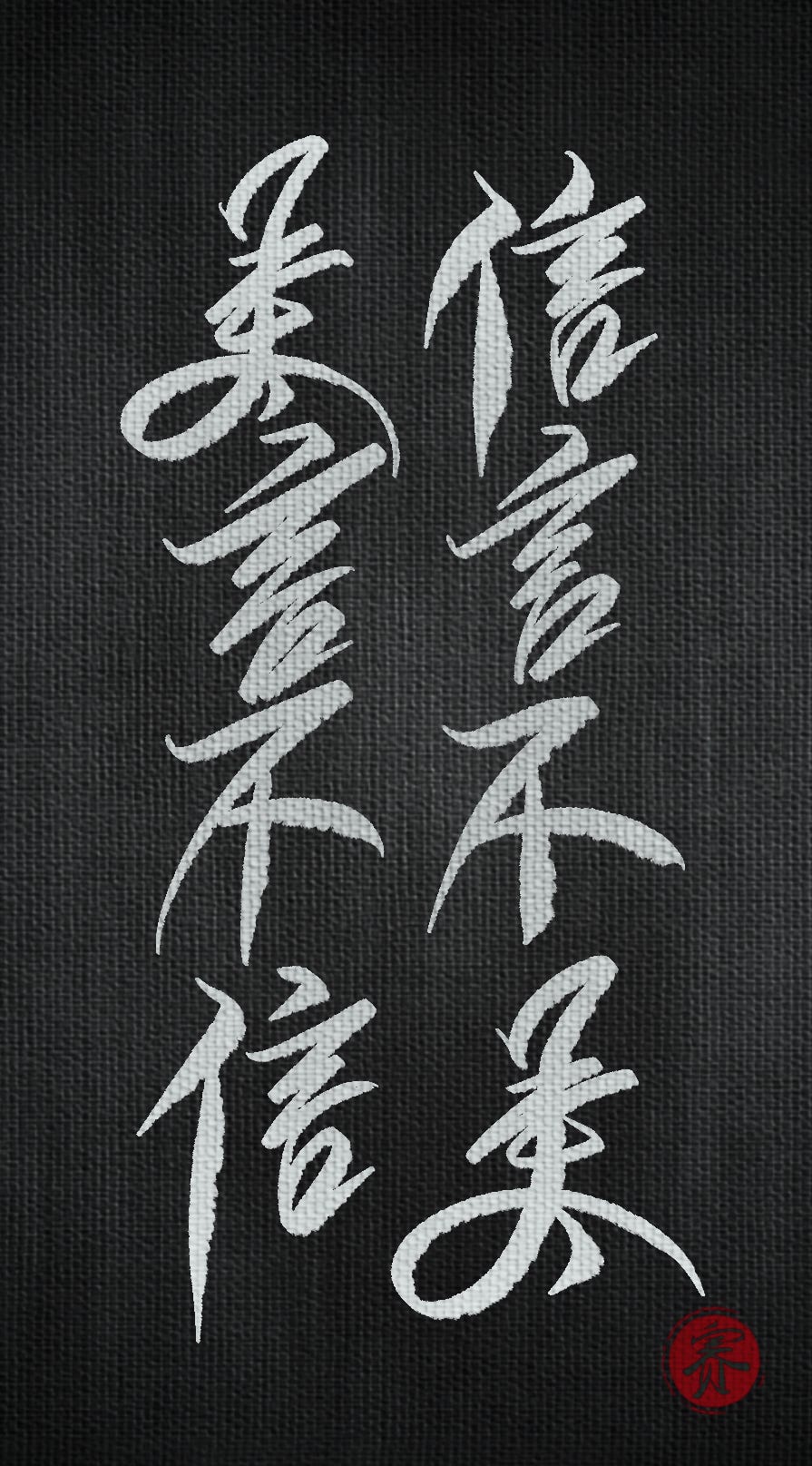
信言不美,美言不信
True words are not beautiful; beautiful words are not true.
When I sat down to write this it was originally just going to be a response to a comment that I received on my essay, The Interrogation Disguised As An Interview. Of course, I soon realized that it would become too long for the comment section. So I decided to give it the attention it deserved. The comment inspired me think more deeply, to fully explain, and to ultimately understand. Through this process, I came to realize that when I framed Professor Jiang’s composure as strictly “non-Western” I risked doing the same kind of flattening that I was criticizing in the interview. It deserved a much deeper explanation. His poise was extraordinary, period. That kind of rare presence can’t be reduced to cultural style. It’s a profound display of emotional intelligence, a rejection of Americanism and the “Western” mindset.
I also noticed that there’s a particular way that Western culture teaches people to engage with ideas, and it has very little to do with understanding them. The dominant mode is competitive. You enter a conversation not to learn but to win, not to exchange but to dismantle. This isn’t incidental. It’s the product of a culture that measures intelligence by how effectively someone can argue, how quickly they can identify weakness in an opposing position, and how decisively they can shut it down. Debate is framed as combat. The goal is dominance, not clarity.
The people who seem most exempt from this are those who’ve deliberately distanced themselves from it, usually through some kind of spiritual or philosophical framework that reorients the purpose of communication entirely. When your starting point is that the person across from you deserves the same respect regardless of whether you agree with them, the entire structure of the exchange changes. You’re not performing. You’re not defending. You’re actually present. That orientation is visible, and it reads as unusual in a Western media context precisely because it is.
This is part of what made Professor Jiang Xueqin’s composure during his interview with Mehdi Hasan so striking. He wasn’t matching Hasan’s energy, deflecting his tactics, or performing composure for the camera. He was simply operating from a different set of values, ones that didn’t treat the conversation as a competition to begin with. That difference in orientation is worth examining, because it points to something much larger than one interview.
What a journalist says on camera is rarely just their opinion. It’s the opinion that was permitted. Western media institutions don’t simply employ journalists. They cultivate them, and that cultivation is a process of alignment. The journalists who rise within mainstream outlets are the ones whose instincts, over time, match what those institutions need. The ones who drift too far from that alignment don’t last. They get edited, defunded, reassigned, or quietly pushed out. The audience never sees the version of the story that didn’t make it through. They only ever see what was approved.
This is why mainstream journalism, across outlets that present themselves as distinct and even adversarial, reads as remarkably uniform. The appearance of diversity is part of the design. But when the same handful of corporations control the majority of what reaches the public, the range of acceptable narratives narrows accordingly. Journalists can debate tone, emphasis, framing. What they cannot do, not without consequences, is challenge the interests of the people and institutions their employers depend on. If a powerful group is not to be offended, then the stories that would offend them simply don’t get told. The journalist may have wanted to tell them. The audience would never know.
The only real exception is the live format. When a journalist is on air without an edit, something closer to the unmanaged truth occasionally surfaces. It’s no coincidence that some of the most revealing moments in recent media have come from interviews and broadcasts that couldn’t be cleaned up before they reached the public. And it’s no coincidence that the journalists involved often face significant professional consequences shortly after.
What makes this even worse is that the algorithm favors the institutions that control them. Therefore, platforms will amplify an interview to audiences primed to accept its framing, while burying everything that might complicate the picture. Even if the interview backfires for some viewers, the algorithm doesn’t care. It only needs to reinforce the intended narrative for the targeted demographic. That’s not a failure of democracy. It’s a bypass of it. The deeper tragedy is that it’s psychologically documented that if a person hears a lie long enough, it’s likely that they will eventually believe it. It’s called the illusory truth effect. So constantly pushing a false narrative will eventually work for a large percentage of the audience. Institutions know this. Designers and marketers use this in every campaign.
Mehdi Hasan is not a stupid man. That’s precisely what makes his interview with Professor Jiang worth examining so carefully. The tactics he employed, the interruptions, the leading questions, the refusal to engage with the substance of what Jiang was actually saying, don’t reflect the work of someone operating at the limits of their ability. They reflect the work of someone operating well below it, and doing so deliberately.
Hasan is, by his own account, someone who thinks about argument as a craft to be mastered. He isn’t just a journalist. He’s an investigative journalist and the author of “Win Every Argument: The Art of Debating, Persuading, and Public Speaking.” That context matters. What appeared on screen during the Jiang interview wasn’t a journalist momentarily losing his footing or letting personal bias get the better of him. It was a skilled practitioner of persuasion executing a strategy. The only question worth asking is who the strategy was designed to serve.
Hasan’s earlier career tells a different story. There was a version of him that asked harder questions, that engaged more honestly with uncomfortable ideas, that seemed genuinely interested in where a conversation might go. That version of him is difficult to reconcile with what appeared on screen during the Jiang interview. The shift is too pronounced, the tactics too calculated, the whole thing too constructed to read as natural decline or personal bias running unchecked. What it reads as is an assignment. Not in the conspiratorial sense, but in the entirely mundane institutional sense. A journalist who understood what the interview was for and performed accordingly.
The conscious viewer sees this. The performance is visible once you know what you’re looking at. The interruptions aren’t curiosity, they’re containment. The reframing isn’t clarification, it’s redirection. The goal isn’t to understand Jiang’s position, it’s to ensure the audience walks away with a diminished version of it. For the viewer who’s paying attention, the tactics actually have the opposite effect. They make Jiang more credible, not less, because his composure under that kind of pressure is its own argument.
But most viewers aren’t watching that way. The unconscious viewer, the one who hasn’t yet developed the habit of watching the structure of an interview rather than just its content, receives the intended version. The doubt gets planted. The association gets made. The work of the interview is done before anyone has had time to examine whether it was honest.
This isn’t accidental, and it isn’t new. The CIA’s KUBARK Counterintelligence Interrogation manual documented a psychological tactic built on exactly this principle: bombard a subject with information that is complicated, contradictory, and disorienting, then offer them something simple. The exhausted mind, no longer able to critically evaluate what it’s receiving, accepts the simple conclusion as relief. It doesn’t matter whether that conclusion is true. By that point, the critical faculty has already been bypassed.
Experts have noted for years that social media platforms and news media operate using variations of the same framework. The volume, the speed, the contradiction, all of it serves the same function as the original tactic. It isn’t designed to inform. It’s designed to exhaust. And an exhausted audience is a receptive one.
Hasan was running a modified version of this in real time. The interruptions, the rapid reframing, the refusal to let any single idea breathe long enough to be examined, these weren’t journalistic tools. They were disorientation tools. The target wasn’t Jiang. Jiang was composed throughout. The target was the viewer.
None of this exists in isolation. The framework that produces this kind of journalism has a history, and that history has a geography. America is the dominant exporter of Western media culture, but America itself is the offspring of England. The institutions, the values, the assumptions about how power should communicate with the public, these didn’t originate in Hollywood or Silicon Valley. They were inherited, refined, and scaled. Hasan is British. That isn’t incidental. He was shaped by the same tradition, operating within the same framework, serving the same fundamental set of institutional interests, just from a different point in the lineage.
This is what makes the pattern so consistent across outlets, across countries, across decades. It isn’t a conspiracy that requires constant coordination. It’s a culture that reproduces itself through the people it selects, trains, and rewards. The journalists who internalize it don’t think of themselves as instruments. They think of themselves as professionals. And in the terms their institutions have given them, they are.
Jiang’s composure, then, isn’t just a personal quality. It’s a refusal. A refusal to be disoriented, to perform on cue, to accept the terms of an exchange designed to diminish him. That refusal is only visible as remarkable because the framework it resists is so thoroughly normalized. When calm reads as radical, that tells you everything about the culture that produced the room he was sitting in.
The interview failed on Jiang. It may not have failed on everyone watching. The fact that we can name what was happening, trace its origins, and recognize it as a documented pattern of psychological manipulation rather than journalism, that matters. Awareness and visibility are the beginning of resistance.
Author’s Note
My name is Saipher Zureti. I am a visual artist and writer. All of the calligraphy in my essays is my original artwork, created specifically for the writing it accompanies.
This Substack is a body of philosophical essays on manipulation, identity, psychology, and the systems that shape how we see ourselves and each other. The essays build on each other deliberately. Each one extends, complicates, or deepens what came before, because these subjects cannot be understood in isolation from one another.
If you want to continue reading and thinking through these systems with me, please subscribe. Thank you for being here.
Until next time, Namaste.