Black Radical Reflections · № 021 · 26 June 2026
The Colonizer’s Language
Diaspora Writers and the Voices the System Selects
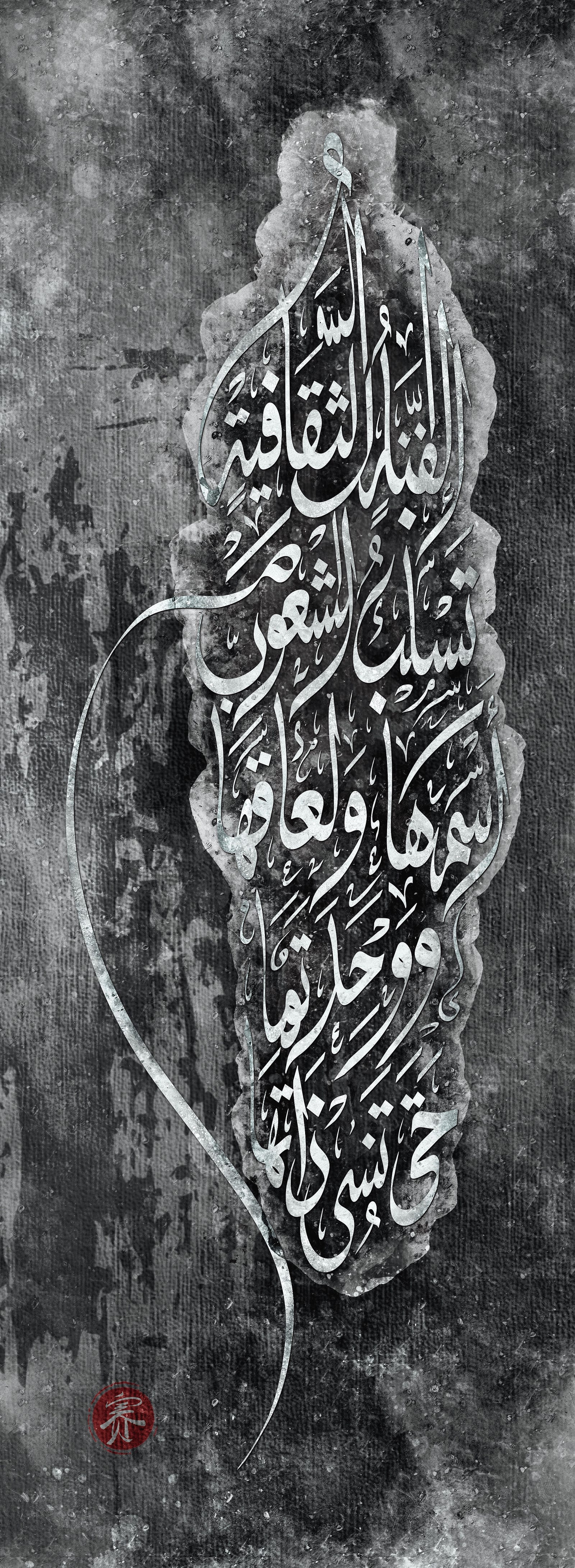
تأثير القنبلة الثقافية هو القضاء على إيمان الشعب بأسمائهم، ولغاتهم، وبيئتهم، وتراث نضالهم، ووحدتهم، وقدراتهم، وفي نهاية المطاف بأنفسه
The effect of a cultural bomb is to annihilate a people’s belief in their names, in their languages, in their environment, in their heritage of struggle, in their unity, in their capacities and ultimately in themselves.
I love when I stumble upon an article that invites me to think deeper on a topic and pushes me to do my own research. I recently read an essay by the writer Mwivanda.glo, When Diaspora Stories Start Defining African Literature, and it really made me stop and think. She opens her piece with a transcription from a Library of Congress interview between the late Kenyan scholar Ali Mazrui and Angel Batiste for the series Conversations with African Writers and Poets, in which Mazrui says that what makes a work African is not its subject and not the identity of its author but the audience it’s written for. That was the best explanation I’ve heard anyone give. It isn’t enough that a novel is set in Africa. It isn’t enough that the writer is African. What determines the audience determines the work.
I’d already been turning over the question of who I write for as someone who’s part of the African diaspora. I touched on it briefly in my previous essay Harmony Without Uniformity. I’d also been thinking about the role of colonial languages in shaping what we can and can’t say to each other. Mwivanda’s piece arrived at the right moment for me, and the question she asks is the right one. There’s more I want to add to the conversation. For me, the issue isn’t that diaspora stories exist or that they’re numerous. The issue is who they’re written for, and the second issue, which isn’t being discussed with anything close to enough honesty, is who’s choosing which voices become the face of the diaspora and which writers get credited as respectable in African literature. Who’s doing the elevating. And who controls the gates.
What I see is a system that selects a very specific kind of African writer. The writer who leaves Africa, learns the colonizer’s language to a level of fluency that impresses the colonizer, and decides to make a living using that language. The writer who has decided to build a career out of mastering the colonizer’s tongue and producing work that the colonizer’s publishing industry will find legible, marketable, and flattering. That isn’t a neutral economic decision. It’s an orientation. It’s a choice about who the work will serve, and it’s made long before the first sentence is written.
The pattern I'm referring to is most visible in non-fiction diaspora writing, the essays, memoirs, criticism, and political commentary that engage directly with questions of identity, race, colonialism, and belonging. Fiction operates somewhat differently. A novelist may be writing about love, family, exile, war, or any number of subjects that don't sit on the same terrain. But the underlying question is the same regardless of genre. The diaspora writer is writing about their experience, and because they are the diaspora, they keep arriving at the same fork in the road. They can write for and directly to their own people and face every difficulty that decision creates, or they can write toward the Western audience and be rewarded for it at their own expense. The choice doesn't completely disappear inside fiction. But it does take a different shape.
With that being said, the writer decides early who they’re writing for and why. Maybe they’ve convinced themselves that writing for the white audience is the only path to being read. Maybe they’ve concluded that finding any other audience would be too hard, too uncertain, too slow. Maybe they tried writing for African readers and the publisher told them to change it. Maybe the publisher didn’t have to say it directly. Maybe they figured it out themselves after enough rejections, enough denials, enough closed doors. Whatever the route, they made the decision, and they’re more miserable for it. The misery shows up in the writing. It may not be obvious to most readers, but it’s there for anyone willing to look.
Writing in English does not mean a writer is corrupt. Toni Morrison wrote in English, but it was obvious to every Black reader who picked up her books that she was writing for Black people. Her audience was not white people. White readers still bought her books, still read them, still debated them in universities and book clubs. But Morrison did not change her writing for them. She did not focus on them. She did not explain things for them. She did not speak to them. The Black reader knows immediately whether a book was written for them or for someone else. It’s in the way the work is written. Every piece of writing has an audience that it is directly addressing, regardless of what the writer claims their intention was.
A writer can say they intended to write for Black people and still produce work that is clearly written for white people. They can over-explain things so that the white reader understands. They can translate references, customs, and ways of being in a way that is unnecessary for a Black reader but absolutely necessary for a white one. A writer can intend to simply share their story and still orient themselves toward the white gaze without being conscious of it. When a writer sits down to tell their story, the real question is who they’re telling it to. Who are you speaking to? The intended audience determines how you tell the story. The tone, the rhythm, the assumptions about what needs to be explained and what can remain unspoken, all of it flows from that decision.
I also have to acknowledge something about the content that diaspora writers tend to produce. Many African diaspora writers write about decolonization, intersectionality, anti-Blackness, representation, and global Black identity. They write about these things because these are the issues we in the diaspora are dealing with directly, every day. We don’t ever get a break from it. The writer chooses their subject because the subject is what they’re struggling with, the experience they’re having. We write to think, to figure things out, sometimes arriving at the conclusion only as we write. It’s the action of writing it out that helps us figure it out, gain insight from it, see the purpose behind it, gain a deeper understanding, heal. Then we share it. Many times, the healing doesn’t happen before the writing. The writing is part of the healing. The writer is working through their inner conflict by writing. They’re figuring it out in their mind through the act of putting words on the page.
The tragedy is that being in the West conditions the diaspora to explain themselves to white people. It’s expected. It’s difficult to be successful in the West without doing so. The system rewards the performance of gratitude and the performance of translation. The writer learns, sometimes consciously and sometimes not, that the path to publication runs through white approval. Western gatekeepers often operate from a mindset founded on the belief that Africans are inferior. So they look for poverty porn. They favor stories about violence, AIDS, impoverishment, and deprivation in ways that confirm Western expectations of African suffering. They elevate anyone willing to stereotype Africa for a paycheck. Those who are willing to do so are selling their souls. The transaction is not hidden. The terms are visible to anyone willing to look at them.
This becomes even more complex when you pair it with the condition of the diaspora born outside of Africa. I’m speaking here of Black Americans, people like me, who don’t know our ancestral languages, who only know the colonizer’s language because every other tongue was beaten, bred, and legislated out of our ancestors over four hundred years. We have no other language to write with. And if we haven’t done the work of decolonizing our minds, if we haven’t examined the conditioning that taught us to see ourselves through the eyes of people who despise us, then we’ll do the very same thing the African exile does. We’ll write to the white audience. We’ll pretend to be the voice of the Black diaspora and the voice of Africans as a whole, and we’ll get elevated and put in front of the world precisely because we’re writing from a perspective that treats distance from Africa as an advantage, that treats not being in Africa as the thing that allowed us to become educated and successful.
The story these writers tell is always the same underneath its variations. Wherever they’ve landed, whatever country has taken them in, that country is painted as better than Africa. The West is better. Europe is better. America is better. The new home is civilization. The old home is a memory to be escaped. They orient themselves in a way that grants them a specific kind of proximity to whiteness, and I need to be clear that white people recognize this immediately. They see the posture. They know what it is. They wouldn’t have it any other way. The African writer who refuses that posture, who refuses to perform gratitude for being rescued from their own continent, who refuses to write about Africa as a problem to be solved by Western values, isn’t the writer who gets the book deal. They’re not the writer who gets the marketing budget. They’re not the writer whose name appears on the shortlists, the prize announcements, and the syllabi of Western universities. At some point the conversation has to stop pretending this is about talent and start examining why only certain voices are referenced, why only certain writers are awarded, why the publishing companies themselves select for the diaspora voice that aligns itself with whiteness and explains the African experience to the white reader from the position of an outsider who claims to be an insider.
The same mechanism that decides which Black American voices get elevated to speak about race in America operates by the same logic that decides which African voices get elevated to speak about Africa. The system rewards the platforms, the careers, and the visibility of those whose work serves the system’s interest in keeping us divided, confused, and oriented toward whiteness. It doesn’t require the conscious participation of the people it elevates. It only requires that their work happen to serve the function.
The writer who fits this description often speaks of not belonging in either place, not fully African, not fully Western, suspended between identities. That confession is treated as a mark of depth. What I see when I hear it is something different. I see an individual in conflict, and the conflict is the result of trying so hard to become part of a community that will never accept them. They’ll never be white enough to be accepted by white people. They aren’t white and they never will be, and yet everything they do is performed in the hope of gaining white acceptance, white favor, white respect, white grace. They orient themselves toward that approval. They change who they are to become a more acceptable version of themselves in the eyes of the very same racist white people who designed the system that taught them to hate where they came from. In the process of that endless self-alteration, they lose themselves. They forget who they truly are. They miss their homeland and they miss themselves, and the person they’ve become is unrecognizable to their families, to their communities, and ultimately to their own reflection. They’re right when they say they don’t fit in either place. They’ve changed too much to return home, and they can never change enough to be accepted where they’ve gone. They could have remained as they were. They could have refused the mask. Instead they chose to wear it, and the person who’s willing to do that to themselves is the person who gets the platform.
Those are the people who become the faces and the voices of the diaspora. Those are the people who get named when the conversation turns to African literature, because those are the people who speak the colonizer’s language in both senses of the phrase. They speak the literal colonial languages, English and French and Portuguese. And they also speak the colonizer’s deeper language, the language that degrades the self and the people, the language that treats Blackness as a condition to be overcome, the language that disempowers African culture and glorifies the West, the language that refrains from speaking any ancestral tongue and replaces it entirely with the tongue of the colonizer. The language that tells the story the colonizer wants told. It isn’t that other writers don’t exist. It’s that the writers who refuse to lose themselves, the writers who talk about Pan-Africanism, the writers who actually go back to Africa, who travel there, who build companies there, who build communities there, who collaborate with other Africans on the continent, who genuinely love African people and do the work of building with them, those voices aren’t the ones the industry wants to hear. Those people don’t get the book deals. They don’t get the publishing contracts. They often have to turn to self-publishing and self-marketing. The mechanisms work together to filter them out.
But I don’t want to leave the impression that there’s no literary life on the continent, or that the only African literature worth discussing is the literature that passes through Western gates. That would be its own kind of lie, and it would reproduce the very erasure I’m critiquing. There’s a robust, active, and growing literary infrastructure inside Africa, and it’s producing work for African audiences. The solution to the problem of diaspora domination isn’t to wait for the Western publishing industry to reform itself. The solution is to identify, support, and build the African publishers, platforms, and institutions that are already doing the work. Diaspora writers aren’t the only problem. There’s an entire system that has made it so certain stories dominate African literature. It isn’t a coincidence, and the writers aren’t entirely the ones to blame.
A good place to begin, if you’re looking for a window into what’s happening on the continent, is the Substack publication Literary Africa. It’s one entry point among many, but it’s a genuine one. Beyond that, there are specific publishers who have committed themselves to Pan-African work without orienting themselves toward the white gaze. Cassava Republic Press, founded in Nigeria, publishes fiction, nonfiction, memoir, and political writing by African authors. Kwani Trust, based in Kenya, helped launch a new generation of East African writers and continues to publish work that speaks to African readers. Modjaji Books in South Africa is a feminist independent press dedicated to African women writers. Ouida Books in Nigeria focuses on African literature and cultural conversation. Epsilon Publishers is a Pan-African publishing house focused on social impact publishing. These publishers exist. They’re doing the work. They need to be supported.
The literary platforms and journals are just as important as the publishers, because they create the ecosystem in which writers develop and find their audiences. Andishi Africa is a Pan-African literary platform promoting African storytelling, readership, and literary culture across the continent. Brittle Paper is one of the largest online platforms dedicated to African literature, criticism, essays, and literary news. Jalada Africa is a Pan-African writers’ collective publishing multilingual African writing and experimental literature. The Republic is a Pan-African intellectual and cultural magazine focused on politics, literature, philosophy, and African futures. OkayAfrica covers literature, music, politics, identity, and art across the broad Pan-African cultural landscape.
The literary journals are where emerging writers often find their first publication and where the conversation about what African literature can be gets worked out in real time. Lolwe Magazine publishes fiction, poetry, criticism, and visual art from Africa and the diaspora. Doek Literary Magazine, based in Namibia, is an independent Pan-African literary journal. Saraba Magazine in Nigeria focuses on contemporary African writing and criticism. Transition Magazine, the historic Pan-African journal founded in Uganda, continues to publish political and literary discourse across the African world. The Kalahari Review publishes essays, fiction, poetry, and commentary from African writers globally.
There are also reading communities and book clubs building African readership from the ground up. Read to Impact is a large Pan-African literary community spanning more than thirty countries with reading challenges, festivals, and book discussions. The Johannesburg Book Club is a South Africa-based Pan-African reading community centered on African literature. The Being African Book Club is a monthly reading community dedicated to books by African authors and diaspora voices. Soma Nami Books Book Club in Nairobi emphasizes African and diaspora authors. EMPRINTE Readers Hub is a Pan-African reading community focused on literacy, discussion, accountability, and reader development. Beyond the continent, there are Black diaspora literary communities doing aligned work, including the Noname Book Club, African Writers Trust, Aké Review, Writivism, and African Arguments.
The writers carrying this work, keeping it alive, matter just as much as the institutions supporting it. Ngũgĩ wa Thiong’o, the Kenyan novelist and theorist, is foundational. In 1986 he published, Decolonizing the Mind, which argued that the writer’s choice of language is the choice of who they address and who they become. He made the decision to stop writing fiction in English and to write in Gikuyu, his ancestral language. His fiction, including Wizard of the Crow, is written from inside African political and cultural tensions rather than as cultural translation for outsiders. He represents a tradition that asks what happens when Africans reclaim narrative authority completely. His son Mukoma wa Ngugi has carried this tradition forward with a contemporary voice that engages modern African realities directly, including nationalism, corruption, Pan-African identity, class, and the politics of African literature itself. His work critiques both Western gatekeeping and romanticized versions of Pan-Africanism, asking how African solidarity gets built without mythologizing the work of building. Nnedi Okorafor occupies a transnational position but writes from African reference points rather than Western speculative norms. Her work blends African spirituality, mythology, futurism, indigenous cosmology, and postcolonial technology in books like Who Fears Death and the Binti trilogy, which helped establish African-futurism as distinct from Western science fiction frameworks.
The diaspora writers working in this tradition write from outside the continent, but their primary emotional and intellectual audience is Black people globally rather than mainstream Western readership. Ta-Nehisi Coates writes about historical memory, Black identity, empire, embodiment, and intergenerational inheritance, addressing himself directly to Black readers in books like Between the World and Me. Even when his work is critiqued, it remains influential in shaping contemporary diaspora discourse around Black historical continuity, structural power, and cultural inheritance. Akwaeke Emezi brings indigenous African spiritual frameworks into contemporary global identity conversations without translating them into Western psychological language. Books like Freshwater feel written for readers navigating multiple worlds simultaneously rather than for readers being introduced to African spirituality as foreign material. bell hooks, though she passed in 2021, remains active in Black intellectual communities through her work. Her writing was directed toward Black self-definition, healing, love, education, patriarchy, and liberation in a way intended to remain accessible to ordinary Black readers, especially Black women. Marlon James writes from Caribbean consciousness and African diasporic memory in books like A Brief History of Seven Killings and Black Leopard, Red Wolf, refusing to flatten Black life into respectability politics or simple identity narratives. He has openly discussed wanting to create epic fantasy rooted in African cosmologies rather than European Tolkien-derived structures. Rivers Solomon uses speculative fiction as a philosophical laboratory for Black existence in books like The Deep, which transforms the history of enslaved Africans thrown overboard during the Middle Passage into an underwater civilization descended from them, and Sorrowland, which explores Black bodily autonomy and institutional violence. Other writers carrying related work include Tananarive Due, Nalo Hopkinson, Percival Everett, and Warsan Shire.
These institutions and these writers exist. They aren’t speculative. They’re operating right now, publishing writers, building audiences, and creating the infrastructure for an African literature that doesn’t need to pass through London or New York to be validated. They are the answer to Mwivanda’s unspoken question about what the solution looks like. The solution looks like these publishers, these journals, these platforms, these communities, and these writers. The solution looks like directing our attention, our money, our submissions, and our readership toward them instead of toward the institutions that have spent decades filtering African voices through a Western lens.
There’s a material dimension to this that has to be acknowledged. Western publishers aren’t hunting down African writers and threatening them with publishing deals. African writers have to search for publishers and pitch their books, and that work is required regardless of which publisher they approach. Someone living in the West is more likely to choose a Western publisher, even if the demands of that publisher aren’t in alignment with their goals and values. Resistance in this context looks like turning down the publishing deal if it requires you to degrade yourself, your people, your culture, or your homeland. It looks like refusing to edit your writing to appeal to the white gaze. That is what resistance looks like, and resistance has a material cost.
I’m not suggesting that every writer who submits to the Western publishing machine has chosen the “easy” path. The opposite is closer to the truth, and this is the irony underneath the whole arrangement. There’s always a sacrifice. The path that appears easy from the outside, the one that leads to the book deal, the advance, the publicity tour, and the prize shortlist, is actually the harder path. It’s harder because of what it requires the writer to give up of themselves. It’s harder because of the daily, ongoing performance it demands. It’s harder because of the loneliness inside the success, which the writer rarely admits to anyone, sometimes not even to themselves. It’s harder because the writer ends up isolated from the people they were originally trying to write for and never accepted by the people who have rewarded them. The shortcut looks easy from the outside. The cost is paid invisibly, over and over, for as long as the career lasts.
Not every writer can afford the cost of refusal. Resistance requires resources, networks, time, and the kind of stability that allows you to say no when a publisher offers you what looks like everything. A writer with no other source of income, with family responsibilities, with the weight of generations of unrealized literary ambition pressing on their decision, may not choose to turn down what is offered. I don’t blame the writer for needing to eat. I don’t blame the writer for needing to provide. I do blame the system that makes the choice so brutal in the first place. The system designed the conditions under which honest African writing becomes economically impossible for most of the people trying to do it. That is the actual problem. The individual writer is operating inside conditions they didn’t create. Many of them are doing the best they can with the options the system has left them. The work in front of all of us is to expand those options so the choice is no longer between dishonest success and honest invisibility.
The system that extracts this price has names and addresses. The gatekeeping isn’t a conspiracy of identifiable villains sitting in a single room. It works through a distributed network of people who sit on prize committees, acquire books for major publishing houses, edit literary magazines that confer prestige, and teach in the university programs that produce the next generation of writers and critics. But some institutions and some individuals have been identified, by critics, by scholars, and sometimes by the gatekeepers themselves, as shaping what African literature is allowed to be in the global marketplace.
The Caine Prize for African Writing is the most concentrated example. Founded in 2000 and named for Sir Michael Caine, the former chairman of Booker plc, the prize has been repeatedly criticized for selecting stories that conform to Western expectations of African suffering and for operating out of the United Kingdom rather than from an African literary institution. The Nigerian critic Ikhide Ikheloa warned years ago that the creation of a prize for African writing may have unintentionally bred writers who are willing to stereotype Africa for recognition, and that many writers are skewing their perspectives to fit what they imagine will sell to the West and to the prize’s judges. Dobrota Pucherová, a scholar of African literature, has argued that the prize undermines African writing by encouraging the reification of marginality and stereotypical images of Africa as a place of trauma and poverty. A single prize, based in London, funded by Western capital, judged by a rotating panel of literary professionals, can shape the output of an entire generation of African writers by signaling what kind of story gets rewarded.
The Nobel Prize in Literature operates on an even larger scale. It has been criticized for denying the award to authors who attempt to correct fallacious colonial narratives, who push for radical decolonization, and who don’t adhere to the watered-down version of post-colonialism that’s championed by Western academic institutions. The pattern is consistent across the major international prizes. They reward the writers who confirm what the West already believes about Africa and punish, through exclusion, the writers who refuse that function.
The second layer of gatekeeping is the publishing conglomerates. The Big Five English-language publishers, Penguin Random House, HarperCollins, Simon & Schuster, Hachette, and Macmillan, control the vast majority of the global literary marketplace. Within these houses, specific editors decide which African manuscripts get acquired, edited, and promoted. The historical lineage of this control is well-documented. The original Heinemann African Writers Series, launched in 1962 and publishing more than two hundred volumes by writers including Chinua Achebe, Ngũgĩ wa Thiong’o, and Nadine Gordimer, was conceived by the British publishing executive Alan Hill. Achebe served as the series’ founding editorial adviser.
When Penguin launched its own African Writers Series in 2010, critics like Akin Ajayi noted in The Guardian that the first five titles were all reissues of books more than fifteen years old, raising questions about whether the series represented a genuine investment in contemporary African writing or a repackaging of existing backlist. Concerns about who is qualified to make those editorial decisions go back further. Critics have long observed that the London-based editors responsible for African series at major publishing houses often had no sustained connection to the continent, and that some have openly acknowledged their lack of confidence in judging African literary excellence.
Several specific editors have been named in the ongoing conversation. Becky Ayebia-Clarke, a British-Ghanaian publisher and former commissioning editor of the Heinemann African Writers Series, has spoken publicly about her discomfort with the way African books were packaged for Western audiences. She described her dismay at the original cover of Tsitsi Dangarembga's Nervous Conditions, which she felt presented African characters in a way that’s deliberately designed to look strange to Western eyes. She then founded her own press, Ayebia Publishing, in part to produce editions that did justice to the work. At the 2009 Cadbury Conference at the University of Birmingham, Ayebia-Clarke described how a significant portion of what the world knows as African literature lies outside the hands of its creators and in the tight grip of institutions that seem to possess fixed ideas about what African literature should or should not be.
Ellah Wakatama Allfrey has been one of the most influential editors of African literature in the British publishing establishment. She was senior editor at Jonathan Cape, Random House, assistant editor at Penguin, editor of the Africa39 anthology, and chair of the Caine Prize. She has served as a judge for the Booker Prize and the Dublin International Literary Award. Her influence flows through multiple channels simultaneously: the prize committees, the publishing imprints, the anthologies that define a generation. She is a serious figure, and her gatekeeping power is real.
The third layer operates through the literary magazines and tastemakers who confer prestige before a book ever reaches a prize committee. Granta magazine has been central to this process. Its 2007 issue on “The New Writing from Africa” and its Africa39 project, which selected thirty-nine African writers under forty, shaped the conversation about who counted as an important African writer. The Kenyan writer Binyavanga Wainaina, who founded the literary magazine Kwani and won the Caine Prize in 2002, used his platform to champion certain voices. His satirical essay How to Write About Africa became a defining critique of the very stereotypes the industry rewards.
The academic study of African literature also functions as a gatekeeping mechanism. Scholars like Sarah Brouillette have written about the biases of even Africa-based print outlets. Caroline Davis has analyzed how publishers refashion and reposition African writers for the UK and US markets. Ikhide Ikheloa has been among the most persistent voices arguing that the Caine Prize incentivizes writers to produce work that conforms to Western expectations rather than work that reflects the complexity of African life.
A newer dimension of the conversation concerns the role of African editors and publishers working within the continent. Anwuli Ojogwu, co-founder of Narrative Landscape Press in Nigeria, has published acclaimed writers including Chimamanda Ngozi Adichie, Oyinkan Braithwaite, and Marlon James. Nancy Adimora, formerly talent and audience development manager at HarperCollins and founding editor of the African literary magazine AFREADA, has worked to shift the pipeline from within a major publishing house. These figures represent a countervailing force, an effort to build gatekeeping power inside Africa and inside the diaspora that isn’t oriented toward Western expectations. But the structural imbalance remains. The major prizes, the major advances, and the major distribution channels still flow through London and New York.
The scholars who study Hispanophone African literature have given this phenomenon a useful name: white alpha-editors. The term was developed to describe how cultural products coming from Equatorial Guinea have been managed from the West, with the result that while Africa suffers a shortage of Black cultural production, Europe receives adulterated products manipulated by white alpha-editors who have acted as gatekeepers of Equatorial Guinea’s literature and have prevented Western audiences from getting original African texts. The gatekeeper doesn’t need to be white to serve the function. The function itself was designed by a white-dominated industry to serve a white-dominated market. The pattern is the same whether the language is English, French, Spanish, or Portuguese.
The system isn’t a failure of individual integrity, though individual integrity is certainly lacking in many of the people who operate it. It’s a structure working exactly as it was designed to work. The Caine Prize, the Booker, the Big Five publishers, Granta, the university literature departments, the literary agencies that represent African writers to Western publishers, all of these institutions form an interlocking system. A writer who wants to reach a global audience must pass through a series of gates, each staffed by people who have been trained to recognize certain kinds of African stories as valuable and certain other kinds as illegible or unmarketable. The writer who writes about Africa as a place of trauma, poverty, and escape, and who writes in a register that explains Africa to a Western reader, will find the gates opening. The writer who writes about Africa as a place of complexity, agency, and rootedness, and who writes without translating for the Western gaze, will find the gates harder to push. The system is inherently racist. It was built to be racist. It produces racist outcomes because racist outcomes are its function.
Now, for Black Americans who have been completely separated and cut off from our ancestral cultures, who no longer know our ancestral languages, who only in the past few generations have even been allowed to truly learn how to read and write English, the story is even more layered. Slavery wasn’t a long time ago. The Jim Crow South wasn’t a long time ago. When my mother went to college, that was a huge accomplishment and an opportunity that her mother didn’t have. My grandmother wasn’t able to finish elementary school. Education was not available or accessible to her, and it certainly wasn’t affordable. My mother’s generation was the first generation not to be born on a plantation. Some of her older siblings picked cotton. She just happened to be one of the youngest and she was born in Chicago, not Mississippi. My grandmother was part of the Great Migration. My grandmother was born and raised on a plantation. My grandmother picked cotton.
It wasn’t until my mother’s generation that we even started really learning English in any formal sense. We were forbidden from speaking our ancestral languages on penalty of death, and we were also killed if we were caught trying to learn to read and write English. So now we’ve arrived at a point where we’re able to read and write without being tortured. Let’s acknowledge the amount of trauma that creates inside a person. To be tortured, beaten, or killed for trying to read and write, for trying to teach your children how to read and write. That creates an amount of trauma that doesn’t stay in the generation that experienced it directly. That trauma gets passed down. It gets passed down from one generation to the next, and it continues being passed down until it’s healed. The same is true for speaking. When you’ve been punished for speaking, there’s trauma attached to the act of speaking itself, and that trauma travels forward through the bloodline.
I haven’t really addressed this before, but I don’t particularly like the English language. I’m not sure I ever have. I don’t really like Latin languages very much, with the exception of Brazilian Portuguese, which sounds different to my ear, it sounds better to me. But generally I’ve always had a strong resistance to English. It doesn’t make sense to me. The rules are interchangeable. Sometimes they apply and sometimes they don’t. The pronunciations change without logic. It has never felt like a coherent language to me. I had the same dis-ease with Spanish. I noticed there was something more than preference underneath it. I noticed there was trauma attached to these two languages specifically. I felt it in my body when I tried to speak them.
One day I had to sit down and trace the feeling back to its source. I had to acknowledge that trauma can attach to a language. English and Spanish were the languages spoken by the colonizers who brutalized my ancestors. They were the languages of the slave ships, the auction block, the plantation, the chain gang, the police baton, the judge’s sentence. Of course there’s trauma attached to them. Of course that trauma was passed down generation after generation into my own body. And when I noticed that, I also noticed that I had far less resistance when I engaged with languages that didn’t carry that connection. I don’t have the same reaction to Mandarin Chinese. I don’t have the same reaction to Swahili. I don’t have the same reaction to Zulu. I don’t have the same reaction to Thai. I even noticed that the only Spanish accents I genuinely enjoyed hearing were the ones heavily influenced by African languages, the accents of the Dominican Republic, Puerto Rico, Cuba, the Caribbean accents that carry African linguistic patterns underneath the colonial surface. I now understand that Brazilian Portuguese sounds better to me for the same reason. It’s more influenced by African languages. It’s easier for my mouth to make those sounds. This isn’t a coincidence. It was my soul remembering. The soul remembers what the mind has been trained to forget.
For the Black American who’s trying to decolonize their mind and understand the pre-colonial African consciousness, learning our ancestral languages matters. I understand that for Black Americans, there are several, because we’re deeply mixed. But that isn’t different from Africans on the continent. Many Africans speak multiple languages. They are master linguists. It’s absolutely normal for an African on the continent to speak five languages. It’s considered normal for an American to speak only one. For Black people in America, it’s common to only know the language of our oppressors and not know our own, because English isn’t our language. We’ve spent generations as Black Americans learning English, perfecting our articulation, trying to speak in a way that will be seen as admirable and respectable, solely to gain recognition from white people who are racist and who will, at every opportunity, claim we’re uneducated, claim we can’t speak properly, claim we still aren’t good enough. All of that effort goes into being accepted by people who will never accept us. And once you gain a measure of acceptance, you have to continue speaking and writing in the way they require. The only way they’ll give you any recognition is if you say the things they want you to say. At what point are we going to learn our ancestral languages so that we can communicate with each other without the trauma and without the conditions?
There's another reason we need to settle on a non-colonial language to speak to each other as a global African people, and it's a reason that doesn't get raised often enough. Right now the default is that we communicate through a colonizer's language. I've already named the obvious problem with that. The deeper problem is that Africans all over the world have, over generations, built our own slang and dialects inside those colonial languages. In America we created Black English, AAVE, a full linguistic system with its own grammar, rhythm, and internal logic. Many Africans on the continent have said openly that they don't understand it. That isn't a failure on either side. It's the natural result of being scattered across continents and developing inside different histories. But it leaves us with a real problem. If a Black person in America wants to speak to all Africans, including those on the continent, the only common ground available is to use “the Queen's English”, the most colonial register of the language. The version closest to the colonizer is the version that crosses the most borders between us. If I speak in my own default Black American dialect, I'm only speaking to Black people in America. The Nigerian writer hears me but doesn't fully understand me. The Kenyan reader catches the surface and misses the texture. We're left with no way to bridge that gap except to learn a new language, and that new language should be an African one. Swahili is the most obvious candidate, given its existing role as a lingua franca across East Africa and its growing use as a continental language of unity, but the specific choice matters less than the principle. A shared African language would let us speak to each other without translating ourselves through the language of the people who divided us.
And I’m not only talking about speaking the actual colonial languages: English, French, Spanish, Portuguese, Dutch, German. I’m also talking about speaking the colonizer’s deeper language, the language of self-degradation. Their language is all the same at that level. It includes degrading yourself and your people. It includes talking about yourself and your people as less than, as subordinate to white people, to Westerners, to Europeans. As long as you talk about your own people as other, as long as you disempower them, as long as you talk down on your own culture, as long as you refrain from speaking your own ancestral language and replace it with theirs, as long as you talk about the pain you experienced in your home country and how everything is so much better now that you’re gone, thanks to the white man, thanks to being accepted into the white man’s country, you’re doing the colonizer’s work for them. Speaking the colonizer's language, in the deeper sense, means all of this. When they have brainwashed you into continuing the propaganda, they have won. Their mission is accomplished. They see proof of it every time you open your mouth or publish a page.
As long as they can bribe you into speaking down on your own people, into writing a certain way, as long as they can convince you to speak directly to white people through your writing, all for a check, for the money, for the brand deal, for the publishing contract, that was the cost. That was the cost of your soul. That was the cost of abandoning your people and abandoning yourself. That is what we’re witnessing when we notice that African literature is being dominated by a particular type of diaspora writer. That’s what some readers are referring to when they say they’re growing tired of the same story. It may not be a bad story on its own terms, but the African reader knows immediately upon starting it that the story wasn’t written for them. They know it the way Black readers always knew that Toni Morrison was writing for them, and the way white readers knew she wasn’t writing for them. When the white literary establishment tried to manipulate Morrison into incorporating white characters, into centering white perspectives, into having a white savior, when they tried to guilt her for never doing any of that, she refused. She called them out for being racist. Her books were banned. She remained one of the greatest writers of the twentieth century. I’ve written in my previous essay Black Power Was Replaced With Black Excellence about how the American system replaced authentic Black political voice with palatable Black individual achievement. Morrison is the example of the writer who refused that substitution. For the honest Black writer who has decolonized their mind, the journey is more challenging and far more rewarding.
This is what Ngũgĩ wa Thiong’o was addressing when he wrote Decolonizing the Mind. He argued that the choice of language is the choice of who you address and who you become, and he made the decision to stop writing fiction in English and to write in Gikuyu, his ancestral language, because he understood that the colonial language carries more than vocabulary. It carries an entire framework of who matters, what is valuable, and what the world is supposed to look like. The colonized writer who keeps writing in the colonizer’s language without examining the relationship is still inside the colonization, still carrying it forward, still performing it for the next generation. The decolonization Ngũgĩ describes is not nostalgia for a pre-colonial purity that can never be recovered. It’s a deliberate act of orientation, a turning of the writer’s attention from the colonizer to the people, and the language is one of the most important sites of that turn.
I came to a smaller version of this realization in childhood, before I had the words for it. I attended a language academy for elementary and middle school. I was there from first grade until I graduated eighth grade. The school required that we take a foreign language every day, just as we took English every day. When I was five years old, I was given a choice between Spanish, French, Italian, and Greek. For a reason I didn’t understand then but understand now, I chose Greek. Greek isn’t a Latin language. It doesn’t use the Latin alphabet. It carried none of the trauma that the other options carried. There was an immediate distance with Greek, a safety, that I didn’t feel with Spanish, French, or Italian. Greek allowed me to simply learn the language, to fall in love with Greek mythology and Greek literature, without the bodily resistance. Greek was fun. I enjoyed it. That choice wasn’t random. It was the same instinct that later drew me toward Brazilian Portuguese and Caribbean Spanish, toward Swahili and Zulu and Thai. The soul knows which languages were forced on it and which were not. The soul remembers what the mind has been trained to forget. Ngũgĩ named the framework as theory. I had already lived it as instinct.
The conversation about diaspora domination in African literature can’t be honest until it acknowledges that the domination isn’t an accident of taste or a reflection of merit. It’s a system, and the system has names and addresses. But the more important fact is that the system isn’t the only thing operating right now. The publishers, the platforms, the journals, the communities, and the writers I have named aren’t theoretical alternatives. They’re operational. Cassava Republic is acquiring manuscripts and printing books. Kwani Trust is publishing East African writers. Brittle Paper is running daily literary coverage. Jalada Africa is publishing multilingual experimental work. Lolwe and Doek and Saraba are giving emerging writers their first publications. Read to Impact is organizing readers across thirty countries. These aren’t aspirations. They’re existing infrastructure carrying existing work toward existing audiences.
And the writers are working. Ngũgĩ wrote in Gikuyu until his death in May 2025, leaving behind a body of work that remains the clearest model of what it looks like when an African writer refuses the colonizer's language without apology. His son, Mukoma wa Ngugi continues to write criticism that critiques both the Western gates and the romanticization of Pan-Africanism. Nnedi Okorafor continues to build African futurism as a distinct tradition. Akwaeke Emezi continues to bring African spiritual frameworks into global literary conversation without translating them for outsiders. Marlon James continues to refuse the flattening of Black life. Rivers Solomon continues to use speculative fiction as a laboratory for Black existence after rupture. The diaspora writers committed to the work are publishing, organizing, and refusing the substitution. The conversation about who dominates African literature can shift if enough of us decide to direct our reading, our writing, our money, our submissions, and our attention toward what’s already being built rather than toward what’s filtering us out.
This is also the call of Pan-Africanism. It isn’t nostalgia for a continental past. It’s the most practical political and cultural strategy available to us right now. The infrastructure exists. The writers exist. The work has been underway for longer than the current conversation has been happening. What’s needed now is for those of us who can to direct our resources and our recognition toward it. The cost of the shortcut is the self, and I’ve seen too many people pay it to pretend the transaction is clean. But the cost of the longer road is something different. The longer road costs you the easier success. It costs you the visibility the system can confer. It costs you the access to certain rooms. What it gives you back is the work itself, the work that doesn’t require you to betray yourself to do it, the work that connects you to readers who actually need what you’re making, the work that lasts because it was honest in the first place. The longer road is harder, but it leads to a place worth arriving at. The infrastructure is already there waiting.
Author’s Note
My name is Saipher Zureti. I am a visual artist and writer. All of the calligraphy in my essays is my original artwork, created specifically for the writing it accompanies.
This Substack is a body of philosophical essays on manipulation, identity, psychology, and the systems that shape how we see ourselves and each other. The essays build on each other deliberately. Each one extends, complicates, or deepens what came before, because these subjects cannot be understood in isolation from one another.
If you want to continue reading and thinking through these systems with me, please subscribe. Thank you for being here.
Until next time, Namaste.