Black Radical Reflections · № 019 · 9 June 2026
He Who Made Me: A Film Analysis of Is God Is
Subjugation, Femicide, and the Architecture of Male Violence
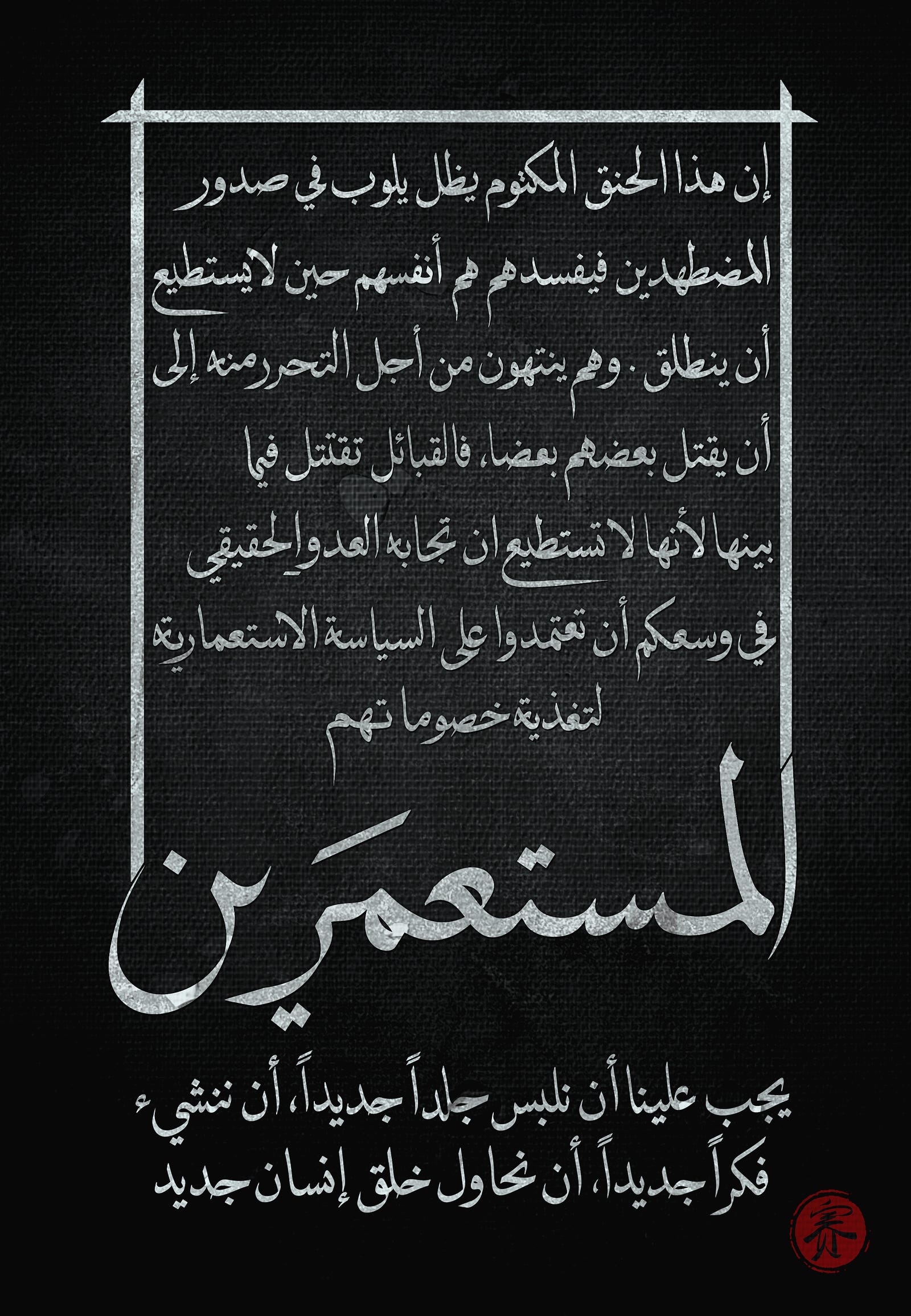
إن هذا الحنق المكتوم يظل يلوب في صدور المضطهدين فيفسدهم هم أنفسهم حين لا يستطيع أن ينطلق . وهم ينتهون من أجل التحرر منه إلى أن يقتل بعضهم بعضا، فالقبائل تقتتل فيما بينها لأنها لا تستطيع أن تجابه العدو الحقيقي في وسعكم أن تعتمدوا على السياسة الاستعمارية لتغذية خصوماتهم
يجب علينا أن نلبس جلداً جديداً، أن ننشيء فكراً جديداً، أن نحاول خلق إنسان جديد
This suppressed rage churns within the breasts of the oppressed, corrupting them from within when it cannot find an outlet. In their quest to be free of it, they end up killing one another; tribes fight among themselves because they cannot confront the true enemy and you can rely on colonial policy to fuel their feuds.” “We must make a new start, develop a new way of thinking, and endeavor to create a new man.” And it is precisely these dynamics that the film, Is God Is visualizes...
The Arabic text above comes from Dr. Sami Al-Durubi and Dr. Jamal Al-Atassi’s Arabic translation of Les Damnés de la Terre by Frantz Fanon, published as معذبو الأرض. In the original French version, Fanon wrote: “Cette agressivité sédimentée dans ses muscles, le colonisé va la manifester d’abord contre les siens.” In the English version, The Wretched of the Earth, Richard Philcox translated it to: “The colonized subject will first train this aggressiveness sedimented in his muscles against his own people.” Whether described as aggressiveness sedimented in the muscles or as a suppressed rage churning within the oppressed, Fanon was describing, more than sixty years ago, what happens when domination cannot move upward and therefore turns sideways to seek proof of it in those closest to them. The second quote is the closing line of the book. In the original French version, Fanon wrote: “il faut faire peau neuve, développer une pensée neuve, tenter de mettre sur pied un homme neuf.” Philcox translated this as: “we must make a new start, develop a new way of thinking, and endeavor to create a new man.” The French “faire peau neuve” literally means to shed one’s skin, and the Arabic translators preserved that image as نلبس جلداً جديداً, to wear new skin. Philcox converted the idiom to its English equivalent, but the Arabic version preserved what Fanon wrote. He was describing the transformation that would be needed in order to change this condition.
I went to see Is God Is last week, and I left the theater certain that Harris had built a film that functions as visual proof of Fanon's diagnosis. Harris named her villain Man, a serial abuser, with no first name to soften it. The film places manhood itself on trial. One man’s cruelty drives the plot, and that cruelty is total, but Harris keeps her attention on the belief underneath it, the conviction that “manhood” requires domination, and on what that conviction does to the women and children who live in his reach. Harris adapted this from her own stage play, and she chose to make her first film about the one subject most of us are trained to look away from.
Harris shows how Americanism, patriarchy, narcissism, the residue of slavery, and the inherited violence against women all converge inside Black men, and what comes out of their fight for control. A Black man in America is subjugated by white supremacy every day of his life. He is told, by every structure he moves inside, that a man is a person who dominates, who commands, who sits above others and is answered to. He is then denied the conditions under which that definition could ever be satisfied. He cannot dominate the people who hold power over him. He cannot command the systems that grind him down. He is handed a definition of manhood he has no way to meet, and rather than reject the definition, he goes looking for someone he can place beneath himself so the feeling of being a man becomes available to him by other means. The nearest person, the most accessible person, the one the whole culture has already marked as available for this purpose, is the Black woman. He turns on her. He subjugates her, controls her, abuses her, and in her diminishment he locates the proof of power that the world refused him everywhere else.
I wrote about the engine of this in Every Woman Is Eve. A man raised inside a model of masculinity built on control comes to understand power as the definition of manhood rather than one possible expression of it. He believes, beneath conscious examination, that a man who does not dominate is not fully a man, and women become the primary arena in which he seeks his proof, because the subordination of women is the oldest and most accessible form of male power available to him. Is God Is takes that argument out of the abstract and puts a face on it. Man tells his daughter, near the end, why he set her mother on fire. He says she would not let him hold her. He says he needed that, as a young man, to be able to stand up fully in his own house. They were not together anymore. He had no claim on her body and no right to her touch. The need he describes is a need for access, for the assurance that a person he can reach for exists and cannot refuse him. Love has no part in it. When she refused him, she took from him the one thing his sense of manhood depended on, which was dominion over her, and he answered her refusal by burning her alive in front of her children.
He gives that act a name when his daughter asks him whether he overreacted. He calls it a “perfectly appropriate response for a young man out of control.” Sit with the precision of that sentence. There is no confession in it. He is laying out a logic, and the logic is internally consistent. If a man’s worth depends on his ability to control a woman, then a woman who removes herself from his control has destroyed his worth, and the destruction of his worth justifies any response he chooses, up to and including her death. The violence is the system he believes in, working as designed. A man who has organized his entire understanding of himself around dominance will experience the loss of dominance as an annihilation, and he will treat the woman who caused it as the agent of his annihilation, which means he will treat killing her as self-defense. That is what Harris is showing you when she lets him speak so calmly. His calmness is the point. He is not deranged in the moment. He is operating from a worldview that millions, if not billions of men share and that the culture spent centuries building.
The film becomes more than a portrait of one monster because it insists that this thing breathes air into other people. It reproduces. It has children. Harris stages the reproduction with two sets of twins, and the doubling is the most careful work in the movie. Racine and Anaia are the daughters Man burned. They survived the fire, they grew up in foster care believing their mother was dead, and they carry the scars on their bodies into adulthood. Anaia’s scars are on her face, and she has spent her life being looked at and looked away from. Racine’s scars are on her arm and back. Their mother, who did not die, writes to them years later and tells them to find their father and kill him. From that command the revenge begins. The two sisters respond to what was done to them in opposite ways, and the film watches the difference between them as closely as it watches everything else.
Racine answers her history by becoming fluent in violence. She is the protector, the one who steps forward, the one who will hurt anyone who threatens her sister. Early in their search she tells Anaia that she’s tired of being the one who gets stepped on. She says she wants to step on something for once, to see how it feels, because it must feel good if everyone else keeps doing it. That sentence is the entire tragedy of subjugation compressed into a few words. A person who has spent her life being stepped on does not automatically dream of a world where no one gets stepped on. She dreams, sometimes, of the day she gets to be the one doing the stepping. She wants a turn at the top of the structure, not the end of it. This is the same impulse that makes a colonized people reorganize themselves into a hierarchy and reach toward the colonizer, hoping that proximity to power will feel like power. Racine has absorbed her father’s central belief without knowing she absorbed it. She believes, as he does, that the world is divided into people who step and people who get stepped on, and she has decided which one she intends to be. She insists that the two of them are killers by nature. She tells Anaia they are the children of a man who tried to kill his wife, and that it is in their blood. The man who burned her taught her, through the fire itself, what kind of person survives in the world he made, and she is determined to be that person.
Anaia refuses the lesson. She is the quieter one, the one who hangs back, the one Racine describes as always needing to be caught before she falls over the edge. When their mother’s command turns into an escalating series of killings, Anaia is the one who keeps asking whether they are going to go through with this, the one who says they are not killers, the one who looks at the bodies and feels the wrongness of the count. She extracts a promise from Racine that no more blood will be spilled except their father’s. She is trying to hold a line between justice and slaughter, between killing the man who burned them and becoming people who kill. The film does not pretend this line is easy to hold, and it does not let Anaia keep it clean. She ends up killing too. The distinction the film draws sits elsewhere. Both sisters kill. One reaches for the identity of killer as a kind of inheritance, and the other resists that identity even as circumstance forces violence into her hands. One of them lets the revenge turn her into the thing that hurt her. The other is trying not to and would rather move on.
The film is careful to show that the harm did not end when the fire went out. After their mother was taken from them, the sisters were passed from one foster home to the next, and the homes that received them kept the abuse going. Anaia remembers a foster father who licked his lips whenever she came into a room with her shoulders showing. She remembers a foster mother who put her scars on display for friends to laugh at. The institutions built to protect children handed these two girls to predators and to people who mocked them, which tells you that the violence Man set in motion was never contained to him. It moved into every place the children landed. The world that received Man’s victims found new ways to wound them, because the society that produces men like Man is the same society that approves foster homes with people who look at a scarred Black girl and see someone available for cruelty. The fire was the beginning of what was done to them. The years that followed were the rest of it.
Harris doubles this dynamic again in the two sons Man fathered with the woman he married after the fire. Those boys, Scotch and Riley, have grown up in comfort inside a beautiful house, and they have divided the same way the sisters did. Scotch performs. He masks whatever is underneath with bravado and noise. Riley keeps still and quiet and hides in the kitchen while his brother holds court. Even their physical differences are telling. Scotch is tall and muscular with a deep voice, while Riley is shorter and lean with a softer one. When Anaia finds herself alone with Riley, she reads his life back to him in a way that explains her own. She tells him that his brother is glad Riley is strange, because Riley’s strangeness lets the brother be the normal one, gives him permission to be whoever he wants, and that Riley goes along with things he does not believe in because he would rather help his brother than be left alone. She is describing Riley and Scotch, and she is describing herself and Racine. The fear of being alone is what keeps the quiet one tethered to the loud one’s choices. The reflective person who can see the harm goes along with it anyway, because the alternative is solitude, and solitude is the one thing the wounded cannot bear. This is how violence recruits the people who know better. It doesn’t always need to convince them. It only needs them to be more afraid of being alone than of being complicit.
The man at the center of all this is a study in a specific kind of emptiness. He loves no one. He is not built for it. Harris shows this not only in the burning and the threats but in his stillness when he comes home to find his sons dead. He registers almost nothing. A father with a heart would be on the floor. He stays upright and calm, and the calmness tells you there was never anyone inside him for those boys to reach. The one thing that does move him is the loss of what he considered an extension of himself. He lashes out at Anaia and tells her that the smart one, the son he had decided was going to be somebody, mattered, and the grief in his voice is grief for a piece of his own legacy rather than for a child. In the same breath he tells her that if she were not carrying his grandchild he would cut her eyes out and feed them to her. The grandchild is the only reason he lets her live, and he wants the grandchild for the same reason he wanted the son to amount to something. It is his. It carries him forward. I wrote in A Name Is a Trust about how a narcissist relates to children, how he treats a child not as a separate person with a life of her own but as an object that exists to extend and reflect him, a way of continuing the parts of himself he wants to see survive. Man is that exactly. His sons, his grandchild, his bloodline, the one son he decided was destined for something, all of it exists only to carry him forward. He cannot mourn his children because he never saw them as anything other than extensions of his own importance, and you cannot grieve a person you never recognized as a person.
This film directly exposes the people who support and therefore enable men like this, and this is where Is God Is moves from a story about one abuser to an indictment of an entire system that keeps such men safe. The first enabler is the lawyer who got him acquitted. After the fire, Man went to court and walked free. Afterwards the lawyer watched Man smile, watched him laugh, watched him show no flicker of remorse for what he had done, and in that moment the lawyer understood what he had returned to the world. Men like Man can sense when someone has seen through them. Man recognized that the lawyer now knew his nature, and to protect himself, he tore out the lawyer’s tongue so he could never tell anyone the truth. The lawyer has spent the years since preparing to die, certain Man will come back to finish him. When the sisters find him, he looks at Racine and tells her she is like her father, that he can see it in her eyes. He has the eye for it now, the ability to recognize the thing he failed to recognize in time. He sees in Racine the same capacity he saw in Man, the same readiness, and he is not wrong. The lawyer is the figure of every professional who lends his competence to a violent man and tells himself he is doing his job. He helped a man who was guilty, a man who didn’t deserve a second chance, a man he should have feared. He freed him and enabled him to start a new life, and the freeing cost him his voice and the rest of his life.
The second enabler is a woman the film calls Devine, a faith healer who runs a Christian church out of her home. She was with Man years ago, and he left her while she was pregnant, and she has been waiting for him to come back ever since. She built a shrine out of the belongings he left behind. She and her household honor him the way a congregation honors a saint, and she has raised the son he abandoned to revere a father he barely knew. This is the religious sanctioning of subjugation made literal. In Every Woman Is Eve I traced how Christianity supplies divine justification for the domination of women, how it transforms a man’s cruelty into something that feels like the natural order, and how women themselves become the most effective enforcers of that order because they absorbed it as love before they had any tools to examine it. Devine embodies that argument. She uses God and the Bible to sanctify a man who set a woman on fire. Forgiveness was the smallest part of what she did. She deified him. And the son she raised on that deification grows up to hunt the sisters. He tracks them down, destroys their car, and tries to kill them, and before they escape him he delivers the line that tells you everything about what his mother built in him. He demands to know whether they think they can kill his father, the man who made him, the man who made Ezekiel, and he repeats the word “HIM” over and over with an emphasis that turns a pronoun into an object of worship. He never had a relationship with this man. The father abandoned him before he was born. Yet the mother’s veneration filled the absence so completely that the boy is willing to die defending a stranger he reveres with a likeness to God. She named him after a prophet and raised him to defend a man he never knew. This is what I meant in A Name Is a Trust when I wrote that a name can be a trust handed to a child to carry someone else’s meaning. Ezekiel carries his absent father’s legacy because his mother decided that was what his life was for, and none of this is surprising once you see how thoroughly she worships the man who left her.
The third enabler is Angie, the woman Man married after the fire, and she’s another painful figure in the film because she is herself a victim. Man kept her as a prisoner and a servant in her own home. She cleaned and arranged his belongings exactly the way he demanded, his hats by style and his boots by material and his ties by color, because he had made it clear that everything had to stay in its rightful place, a man in his place and a woman in hers. She has lived inside his rules for years. And she has saved eleven thousand dollars in secret and planned an escape down to the train schedule, a new name and a job waiting for her in another state, a life away from him. She was hours from freedom when the sisters arrived looking for their father. She knew what he had done to their mother. She tried to tell herself it was an accident because he called it one, but the only detail she held onto with certainty was that he had told her he would not have to pay child support. When the sisters confront her, she assumes they have come for money, and she tries to hand them her pearls to make them disappear. When they take her car keys instead, the thing she needs for her escape, she becomes a different person. She insults their mother. She calls her weak and ghetto trash. She says their mother should have left, that a woman who knows her worth will leave. The hypocrisy is staggering, because Angie herself only decided to leave after years of imprisonment, and she is standing there blaming a burned woman for failing to do the thing Angie has barely worked up the nerve to do. Angie’s accusation is wrong even on its own terms. Their mother had left him. She was separated from Man and had a restraining order against him. He violated it, broke into her house, and attacked her. The woman Angie calls weak for not leaving had already left, and he came for her anyway. The film is showing you how subjugation turns its victims into prosecutors of one another. Angie has internalized the belief that the burned woman is responsible for her own burning, that the violence was a verdict on the victim’s character rather than the perpetrator’s, because that belief is the only thing that lets Angie feel she will fare differently. If the mother got burned because she was weak, then Angie, who is smart enough to plan an escape, will be safe. The belief is a survival strategy, and it requires her to side with the logic of the man who imprisoned her. She blames the woman because blaming the woman is how she has learned to feel some measure of control in a situation in which she has never had any control at all. This is the Eve logic exactly, the reflex that holds a woman responsible for the harm a man does to her, and it lives even inside the women the harm is being done to.
The title of the movie sits over all of this and does its own work. The daughters call their mother God. When they explain themselves to Angie, they say their mother made them, so she is their God, and they describe themselves as nothing but the hand of God doing her bidding. The grammar of the title comes straight out of the way the daughters speak, and it sets a female God against the father-worship that Devine built her whole household around. On one side of the film a woman who was set on fire becomes a deity who commands her daughters from a sickbed. On the other side a woman turns the man who burned another woman into a saint. Harris is staging two opposite acts of devotion, and she is asking you to notice that the mother’s daughters are sent to kill and the abuser’s devotee sends her son to protect. The God who is a burned mother demands blood for what was done to her. The god who is an abusive man demands blood from anyone who would hold him accountable. Both devotions end in death. The film is not sentimental about the mother’s command. One of her daughters dies carrying it out.
Underneath the gothic style and the dark comedy and the road-trip structure, the subject of this film is femicide, and Harris released it into a country where the killing is constant. Black men are killing Black women at a rate that should be a national emergency. They are killing their wives, their girlfriends, the mothers of their children, and killing the children too. The reports arrive so often that they have stopped registering as news. The film does not exaggerate this. The real cases are worse than anything on the screen, and the film arrived in theaters in the same season that real men are murdering their families while the country finds ways to be distracted. When these killings reach public attention, the same defenses arrive every time. The man who committed the murder gets recast as a victim of a mental health crisis, his pain pushed to the front of the conversation while the woman and the children he killed recede into the background. People who would never say it about any other crime say he snapped, he was struggling, he was a good man going through something. The excuses arrive on schedule, and the gaslighting and the victim-blaming finish the job. The same reflex that lets Angie call a burned woman weak runs through an entire culture, because we live in a society that treats women as property, and the loss of property does not move people the way the fall of a man’s standing does. A society that does not value women will not protect them while they are alive and will not grieve them once they are dead, and it will always find a reason to decide that the woman brought it on herself. Harris put this on the screen because the conversation outside the theater keeps refusing to be honest. She made the enablers into characters so you could watch the protection operate up close, the lawyer who frees the killer, the believer who sanctifies him, the wife who blames his last victim, and recognize them when you meet them in the comment sections under the next headline.
When a film like this appears, people object on the grounds that it airs the community’s worst behavior in front of a hostile world. Some have made that objection about Is God Is already, uncomfortable that a Black woman wrote and directed a story in which the Black man is the monster. I understand where the instinct comes from. Black men are vilified everywhere, and the protective reflex is real and earned. But that reflex, when it is used to silence the truth about what is happening to Black women and children, becomes one more enabler in the system. The only people vilified and disrespected more than Black men are Black women. The demand that we not air this is the same demand that keeps the killing quiet, the same logic that tells a burned woman she should have stayed silent, stayed home, and allowed herself to be abused in every way possible. Protecting the image of Black men at the cost of Black women’s lives is a choice, and it is the wrong one. Harris has spoken about having to free herself from the story she thought she was allowed to tell as a Black woman, and you can feel that freedom in the film, in her refusal to make the smaller, safer version that would have protected everyone except the women it was about. She made a film that does exactly what living art does. It refuses the avoidance on your behalf.
The hardest question the film asks is the one it saves for the end. Does revenge resolve the harm, or does it repeat it? The two sisters give two answers with their lives. Racine, who reached for the identity of a killer as her inheritance, who wanted her turn to step on something, is consumed by the violence she embraced. She dies inside the world her father made, having become fluent in his only language. The cycle did not break with her. It closed around her. She set out to destroy the man who turned her into a survivor of his cruelty, and in the process she became a person who kills the way he killed, and the becoming cost her everything. The film is clear about this. A person who answers domination by learning to dominate has taken a position inside the structure, not escaped it.
Anaia survives, and the way Harris ends her story is the only hope the film offers, and it’s real. After all the blood, Anaia is alone for the first time in her life. The noise of the mission is gone and the quiet lets things come clear. She is scarred, she is carrying a child, and she has killed her father with her own hands, and the film does not hand her triumph for any of it. What it hands her is a choice about what she will be from here. She vows to raise her baby and tell her about her aunt and about the road they traveled and about the good things that exist in the world even for girls like them. She tells herself she has to feel the sun to see it. Killing the father gave Anaia nothing back. It did not return her face or her childhood or her sister. The resolution the film offers lives in her decision to define herself by the child’s future rather than by the scars of her past, in her refusal to let the wound be the whole story. That refusal is the only thing in the film that breaks anything. The revenge fulfilled the mother’s command and left a trail of corpses and gave the survivor nothing but the silence in which to choose. The choice is what matters. A person who has been brutalized always has a choice between becoming a reflection of what was done to them and refusing to pass it on, and the film locates its entire moral weight in that single decision, made by one scarred woman alone with the child she has decided to raise differently.
This movie pointed to a truth that's been nagging at me quite a bit lately. And that truth is that ultimately, subjugation is the problem. It's the action that gives birth to colonialism, imperialism, racism, patriarchy, the violence done to women. Every one of them is the same structure under a different name. Set a power structure on top of a group of people, and the group reorganizes itself underneath it. It builds an internal hierarchy and reaches toward the people above it, hoping that proximity to power will be mistaken for power. It will betray its own and step on whoever is within reach to feel the relief of being, for once, the one in control rather than the one being controlled. Man was made by a country that subjugates Black men, and he remade that subjugation in his own house with his wife and his children under his control. Racine was made by Man, and she reached for his power the only way she knew how, by becoming someone who could step on another person. The pattern passes in one direction, parent to child, structure to person, and it keeps passing until someone in the line refuses to carry it forward. Harris ends her film with that someone. The man who made her is dead and she’s moving on. The cycle had every chance to take her, and she refused to hand it forward. That is what survival looks like when it carries meaning. She turns away from the killing and toward a child.
Author’s Note
My name is Saipher Zureti. I am a visual artist and writer. All of the calligraphy in my essays is my original artwork, created specifically for the writing it accompanies.
This Substack is a body of philosophical essays on manipulation, identity, psychology, and the systems that shape how we see ourselves and each other. The essays build on each other deliberately. Each one extends, complicates, or deepens what came before, because these subjects cannot be understood in isolation from one another.
If you want to continue reading and thinking through these systems with me, please subscribe. Thank you for being here.
Until next time, Namaste.