Black Radical Reflections · № 002 · 14 April 2026
Harmony Without Uniformity
Harmony without Uniformity - Saipher Zureti
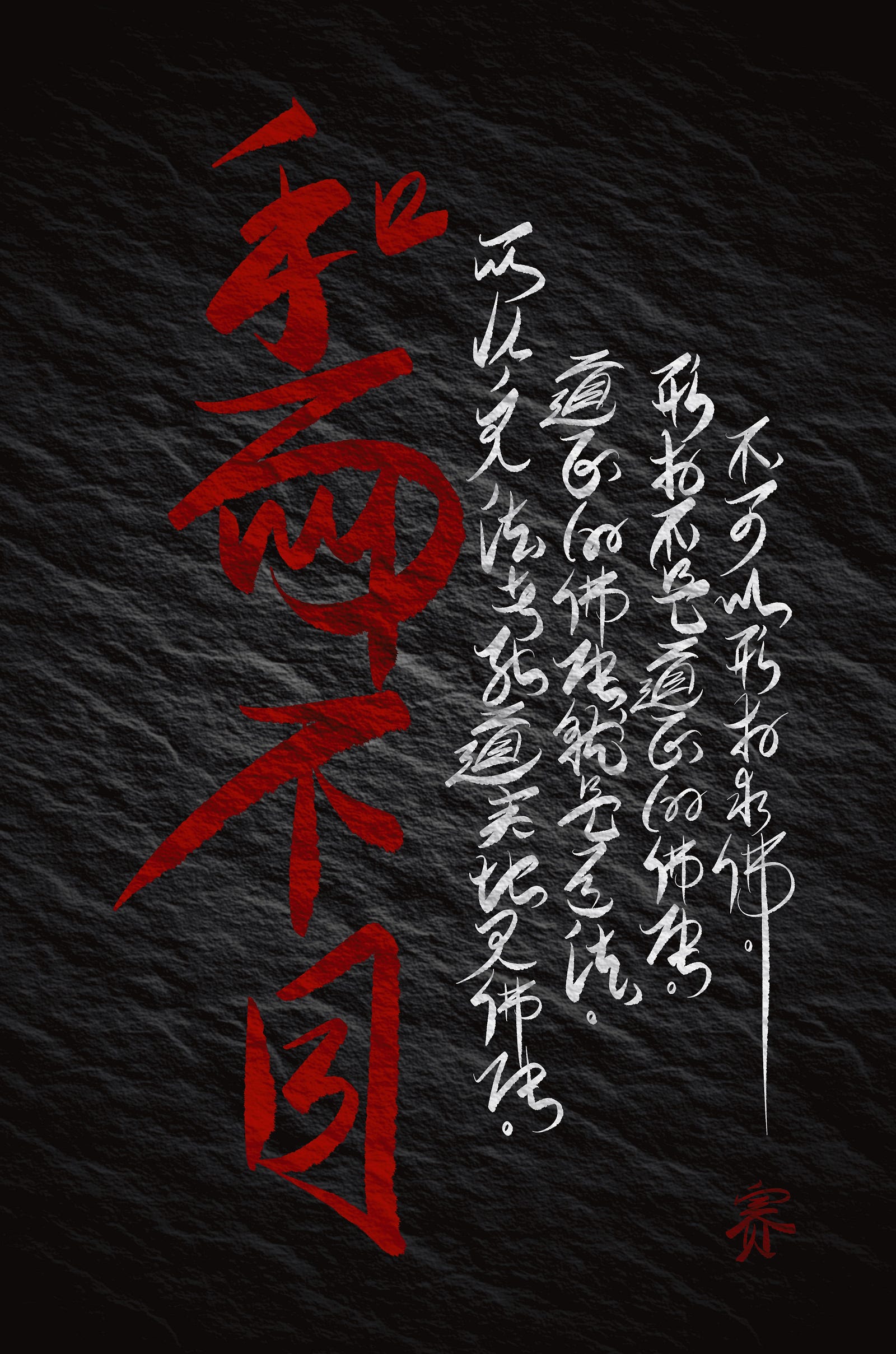
不可以形相求佛。形相不是眞正的佛陀。眞正的佛陀就是道法。所以,见法者能眞实地见佛陀。
和而不同” { Seek Harmony Rather Than Uniformity }
Source: The master said, “The man of noble character seeks harmony rather than uniformity, while the mean man does the opposite.” - The Analects, Zilu Chapter 13.23
{ Do not seek to know Buddha by His form or attributes; for neither the form nor the attributes are the real Buddha. The true Buddha is Enlightenment itself. The true way to know Buddha is to realize Enlightenment. }
Two passages, one from The Wisdom of The Analects and one from The Teaching of Buddha have been stuck in my head all week. I’ve been sitting with it, knowing that it was an important message for me. It wasn’t a coincidence that I read it and that it still lingered in my mind. I carried on with my week and the messages kept coming back to me. I stumbled upon a Toni Morrison interview talking about resisting the white gaze. Then a few days later, I stumbled upon a video of Octavia E. Butler saying that you have to insert yourself into your writing. Then I had an unexpected conversation with someone where I was again reminded to stop conforming, stop procrastinating and just create, just be. Do the d*mn thing already and stop making excuses. So of course all of this led me to have a realization this week that I’m still sitting with. At 36 years old, almost 37, I just realized that I’ve been code-switching in my writing. Of course, almost every black person in American society code-switches or has at least once in their lives. It’s something that we’ve gotten used to doing, to the point where now, it’s almost automatic.
I’ve had to walk into certain rooms, and adjust my language depending on who’s in the conversation. Constantly translating myself just to be received. This, I had been very well aware of, but I hadn’t looked at my writing through that lens until now.
What really made me notice it was looking back at my work and realizing how many times I rewrite before I publish. And not just editing, not just cleaning things up. I mean rewriting to the point where the finished piece doesn’t sound like me anymore. It sounds correct. It sounds like something a reader couldn’t argue with, couldn’t misread, couldn’t find fault in. But it doesn’t sound like me. And the moment I noticed that, I understood exactly why it was happening. I’ve been writing for approval. I’ve been positioning myself for the white gaze.
Toni Morrison talked about this directly. She wrote for Black people. That was a conscious, deliberate choice, and she was clear about it. But for so many of us, that kind of clarity doesn’t come easily because we’ve been conditioned out of it. We’ve been trained to consider the white reader, to anticipate their confusion, to preemptively explain ourselves, to soften the edges of whatever we’re saying so that it lands safely on the other side of a cultural gap they never had to bridge. We do all of that before a single person has even read a word.
The problem isn’t just that it’s exhausting, though it is extremely exhausting. The deeper problem is what it costs you internally. Writing from that place splits you. There’s the version of yourself that writes for an audience that understands you. And then there’s the version that does twenty rewrites aimed at an audience that was never going to fully understand you anyway. And there’s something else underneath both of those. A third version. The truest one. The one that existed before the adjustment and before the audience. When you’re not thinking about being misunderstood, when you’re able to just get it all out, when it’s raw. That’s the one I’ve been writing away from.
And that’s the part I had to sit with. A white reader can’t truly understand what it’s like to be Black in America. That’s not a judgment, it’s a fact. They can’t understand what it’s like to not have their white privilege. They can’t step outside of their own framework enough to get there. So when I keep revising and explaining and clarifying in the direction of someone who can’t actually receive what I’m saying no matter how perfectly I say it, I’m not communicating more effectively. I’m just losing myself in the process.
So going back to that concept in The Wisdom of The Analects: Harmony without uniformity. It became even clearer to me. You can be in relation with something, you can exist alongside it, without becoming it. Harmony doesn’t require sameness. It doesn’t ask you to reduce yourself to fit. And that’s exactly what code-switching demands, not harmony, but uniformity. Not coexistence, but assimilation. The invitation to code-switch is always an invitation to become legible to someone who was never going to meet you halfway.
I started writing through poetry. That’s where it began for me, and what I understand now is that poetry is the closest form of writing to a person’s unfiltered mind (for me). It doesn’t explain itself the way an academic essay does. It doesn’t hedge. It doesn’t slow down to make sure the reader is still with you. It just is. That’s what makes it feel true in a way that heavily revised prose often doesn’t. And somewhere along the way, I stopped writing poetry first. I started going straight to the essay, and then I’d write it and rewrite it and by the end I’d have something technically correct but stripped of everything that made it mine.
What code-switching in writing really produces is a version of yourself that passes. Something that gets accepted. Something that doesn’t make anyone uncomfortable. And none of that is the same thing as being authentic. It took me until almost 37 to name that, and I think a lot of Black writers are doing the same thing I was doing without realizing it. We’re asking for permission through our prose. We’re pre-apologizing for taking up space. We’re writing around the thing instead of openly writing about it because we’ve internalized the expectation that we’ll need to defend ourselves, and we’ve started doing the defending before anyone even asks.
The passage from The Teaching of the Buddha, “Do not seek to know Buddha by His form or attributes, for neither the form nor the attributes are the real Buddha. The true Buddha is Enlightenment itself. The way to know Buddha is to realize Enlightenment.”, also brought me another message. In the context of writing and voice and authenticity, the polished presentation isn’t the thing. The academic correctness isn’t the thing. The version of a writer that’s been shaped to be acceptable to people who can’t really see them anyway, that’s not the writer. The real writing is what comes before the performance. The real voice is what’s underneath the approval-seeking edits.
I’ve been practicing public speaking because it’s something I’ve been afraid of for a long time, which is something most people wouldn’t even believe about me. So to help overcome my fear, I drive and record myself giving a speech, or spoken word, talking through my thoughts, just letting it come out, and then I’ll later transcribe it and build from there. My stream of consciousness is most open when I’m driving. My thinking is clear. My voice is more honest. And that tells me something important about what needs to be protected when I sit down to write. The rawness isn’t a problem to be edited out. The rawness is where the real thing lives.
Writing for your people means trusting your audience. It means not over-explaining what they already know. It means allowing the reader to discover something through the work instead of handing them every conclusion spelled out. When you trust your audience, you give the writing space to do what it’s supposed to do. And everyone who reads it is going to get something different from it, and that’s not a failure of clarity, that’s how writing works when it’s honest. What triggers one person to start a fast, might trigger another person to call someone they haven’t spoken to in years. The point isn’t to control what the reader receives. The point is to give them something real to receive.
This week reminded me of a profound truth that every writer and all creative individuals need to remember. You don’t have to conform to have harmony. That usually leads to the opposite of harmony. The real thing you’re trying to offer isn’t in the exterior you’ve been carefully constructing for people who were never your intended reader. It’s in what you were before you started revising yourself for approval. It’s in the poem you wrote before it became an essay. It’s in the voice note you recorded in the car before you transcribed it into something presentable. That’s where you are. That’s what your people came to read. They already understand. You don’t need to translate yourself for them. You never did.
You write for yourself, and you share for your people. It is a gift, a gift that keeps on giving. But remember: the first gift is to yourself, to your soul. Return to the voice before the revision and stop writing for permission.
Author’s Note
My name is Saipher Zureti. I am a visual artist and writer. All of the calligraphy in my essays is my original artwork, created specifically for the writing it accompanies.
This Substack is a body of philosophical essays on manipulation, identity, psychology, and the systems that shape how we see ourselves and each other. The essays build on each other deliberately. Each one extends, complicates, or deepens what came before, because these subjects cannot be understood in isolation from one another.
If you want to continue reading and thinking through these systems with me, please subscribe. Thank you for being here.
Until next time, Namaste.