Black Radical Reflections · № 003 · 16 April 2026
Distraction, Belief, and the Avoidance of the Self
Distraction isn't a bad habit. It's a psychological strategy and underneath it is something most people spend their whole lives avoiding.
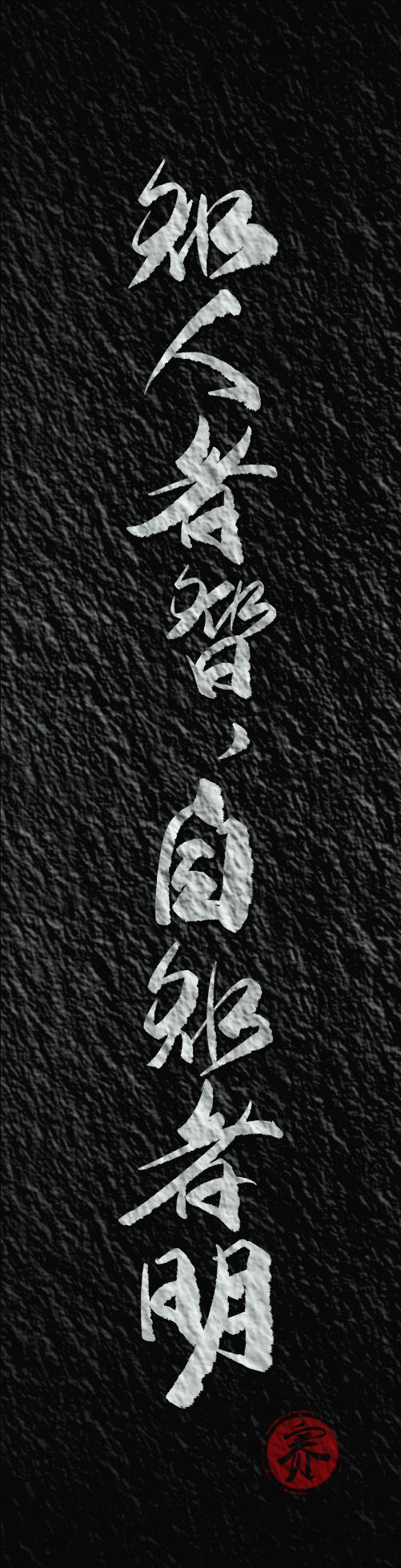
知人者智,自知者明
zhī rén zhě zhì, zì zhī zhě míng
If you can’t find joy in the moment, can you accept the moment? If you can’t accept the moment, can you change the moment? If you can neither accept nor change the moment, ultimately, you’ll be miserable.” “Knowing others is wisdom. Knowing yourself is enlightenment.
I heard this in a random YouTube video. I don’t even remember which one. I couldn’t tell you who said it or what the video was actually about, because honestly, that one passage was the only thing that stayed with me. And I’ve come to understand that when that happens, when a single sentence out of an entire video or conversation or book is the only thing I walk away with, it’s usually because that was the message I was meant to sit with. Not the rest of it. Just that.
So I sat with it. And the longer I sat with it, the more honest I had to be with myself. Because when I really looked at it, I realized I’d been doing exactly what that quote describes. There were things I couldn’t change that I was still dwelling on. Things I couldn’t accept that I was still refusing to release. And in doing so, I was contributing to my own misery. Not circumstances. Not other people. Me.
That kind of honesty isn’t comfortable. But it was necessary. And it opened up a much deeper line of thinking, not just about the quote itself, but about what actually happens when we can’t find joy, can’t accept the moment, and can’t bring ourselves to change. I realized that there’s another part or stage that’s being left out. And most people do it without even realizing it.
When joy can’t be accessed and acceptance feels intolerable, most people don’t sit still. We don’t stay quietly with what’s unresolved long enough for it to speak. Instead, we turn away. We look for movement, stimulation, and interruption. We distract ourselves.
And that turning away isn’t random. It’s an ancient response to threat. When the internal landscape feels overwhelming or unsafe, attention gets pulled outward. Distraction becomes a way of keeping distance from what hasn’t yet been integrated. It’s not just a bad habit or a lack of discipline. It’s a psychological strategy rooted in self-protection. That’s important to understand, because when we frame it as laziness or weakness, we miss what it’s actually doing and why it’s so persistent.
Distraction tends to be the thing we opt for when something challenges our beliefs, when we become fearful, and anytime we’ve entered a cycle of emotional avoidance. It persists not because it resolves suffering, but because it postpones it. What sustains it isn’t its capacity to heal, but its ability to delay confrontation. And to really understand why it has such a hold on people, you have to look beyond the behavior itself and toward the deeper mechanisms underneath it.
In lived experience, distraction often occupies the space between suffering and transformation. When dissatisfaction feels immediate and pressing, yet change feels inaccessible, stimulation offers relief. Pleasure, novelty, excitement, and constant engagement pull awareness outward, quieting what stirs beneath the surface. There’s a reason why people get stuck in what I like to call the infinite scroll on social media. It’s a form of distraction. While the relief it provides is real, it subtly reshapes the relationship between a person and their inner world, and not in a direction that serves them.
What we commonly call “fun” frequently plays a central role in this. Enjoyment itself isn’t the issue. Play and pleasure have always been part of human life and there’s nothing wrong with them. The difficulty arises when fun becomes a refuge rather than a rhythm, when it’s used not to deepen life, but to avoid it. In those moments, fun functions less as celebration and more as numbing.
Like anesthesia, distraction softens sensation without addressing its source. It interrupts awareness, offering temporary relief while leaving the underlying condition untouched. And when the stimulation fades, what was avoided returns, often with greater insistence. The discomfort reemerges not as punishment, but as an invitation that keeps getting deferred.
At the center of this pattern is our belief systems. In many cases, we aren’t bound by our circumstances as much as we’re bound by what we hold to be true. The belief that change is impossible quietly shapes our perception, narrowing what feels accessible and closing possibilities before they’re ever seriously considered.
Our personal beliefs shape our reality. When change is believed to be unattainable, curiosity diminishes. Exploration feels futile. Over time, belief and inaction reinforce one another until limitation feels fixed, almost fated. I’ve watched this happen in myself, and I’ve watched it happen in people I care about. The belief becomes the ceiling, and in many cases, a cage that keeps us limited.
But our beliefs also carry the potential for expansion. When positive change is believed to be possible, uncertainty becomes something to move toward rather than away from. The difference lies not in external conditions but in the orientation of attention, whether it turns toward possibility or retreats into familiarity.
Belief alone, though, doesn’t account for all forms of stagnation. There are people who know, often with painful clarity, that change is possible. They recognize the patterns that sustain their dissatisfaction. They sense what must be relinquished or confronted. And yet, they stay where they are. I’ve been that person too.
What holds them, what held me, is fear. Change threatens the known shape of the self. It asks for the surrender of identities, habits, and narratives that once provided structure, and that surrender is never a small thing. A person’s sense of who they are, even when that sense is built on suffering, offers a kind of stability. It’s familiar. It’s predictable. The self that hasn’t yet changed at least knows what to expect from itself. What lies on the other side of genuine transformation is unknown, and the unknown, regardless of its potential, carries a weight that familiarity never does. Even suffering, when it’s the suffering a person has always known, can feel safer than happiness or healing because it doesn’t require the uncertainty of becoming something new. That’s not weakness. That’s just how deep the attachment to the known self actually runs.
In that space, distraction becomes especially compelling. It offers motion without crossing thresholds, stimulation without initiation, and activity without transformation. Over time, the avoidance becomes habitual, reinforcing the very state it was meant to soothe.
Beneath the belief and fear is the avoidance of emotion. Most of us were never taught how to remain with discomfort without immediately seeking relief. The capacity to sit with an uncomfortable feeling, to let it exist without immediately acting on it, suppressing it, or explaining it away, is something most people never practiced and were never shown how to do. When emotions arise that feel unsettling, such as sadness, dissatisfaction, grief, emptiness, the instinct is to turn away.
That turning away takes many forms. Dissociation is one of them. It’s a process by which a person subtly disconnects from their own bodily sensations and emotional experience, not through a conscious decision, but as an automatic protective response. A person can be physically present in a room while being entirely absent from their own inner experience. They’re there, but they’re not truly with themselves. Sometimes avoidance looks like constant engagement, noise, or stimulation, anything that keeps the surface of attention occupied so that nothing deeper can rise. In all cases the person is avoiding the self.
Our egos actively participate in sustaining this avoidance. Not in the colloquial sense of arrogance, but in the psychological sense, the ego is the part of the self that constructs and defends a coherent identity. It organizes experience into a story that feels manageable, and when that story is threatened, it resists. It offers explanations that make avoidance feel reasonable. It reframes stagnation as patience, procrastination as preparation, and fear as wisdom. It convinces you that you’re not avoiding at all, that you’re simply waiting for the right moment, the right conditions, the right sign. Stillness becomes threatening because it removes the protective layer of distraction and allows deeper issues to surface. Vulnerability is resisted because it carries the weight of having to acknowledge what’s actually true, not to another person, but to yourself.
Over time, sustained avoidance leads to disempowerment. The more discomfort is bypassed, the less agency is felt. Growth slows. Relationships flatten. Life begins to feel narrower, not because possibility has vanished, but because contact with inner truth has been reduced.
Distraction creates the appearance of movement while leaving deeper structures untouched. Experiences accumulate, time passes, and yet something essential remains unresolved. The cost of this pattern isn’t just unhappiness. By avoiding emotional truth, healing is delayed. By avoiding vulnerability, intimacy is deferred. By avoiding discomfort, purpose remains unrealized.
Misery, then, doesn’t arise simply from the inability to find joy, accept the moment, or initiate change. It arises from the ongoing refusal to turn inward. When attention repeatedly turns away from what seeks recognition, transformation remains inaccessible, not because it’s impossible, but because it’s never met.
Presence doesn’t promise comfort. It asks for honesty. It requires the willingness to remain with what is unresolved long enough for understanding to emerge. Without that willingness, distraction will always feel easier, and change will always feel out of reach.
The real issue isn’t whether you can find joy, accept the moment, or change your circumstances. Those are secondary concerns. The deeper question lies beneath all of them.
Can you face yourself?
Can you remain present with discomfort long enough to understand it? Can you tolerate uncertainty without numbing it? Can you allow emotional truth to emerge without fleeing into distraction?
Transformation doesn’t begin with escape. It begins with presence. And presence requires courage, not the courage to change immediately, but the courage to remain honest. Until that honesty is possible, change remains conceptually available but psychologically inaccessible.
Distraction, then, is not the enemy. It’s the signal. It marks the place where attention turns away from the self. And wherever attention turns away, something essential waits to be discovered, to be addressed, and to be alchemized.
Author’s Note
My name is Saipher Zureti. I am a visual artist and writer. All of the calligraphy in my essays is my original artwork, created specifically for the writing it accompanies.
This Substack is a body of philosophical essays on manipulation, identity, psychology, and the systems that shape how we see ourselves and each other. The essays build on each other deliberately. Each one extends, complicates, or deepens what came before, because these subjects cannot be understood in isolation from one another.
If you want to continue reading and thinking through these systems with me, please subscribe. Thank you for being here.
Until next time, Namaste.