Black Radical Reflections · № 023 · 9 July 2026
American Independence
The Fourth of July was a day of protest. Why so many now celebrate a holiday that was never theirs, and the erasure that made that possible.
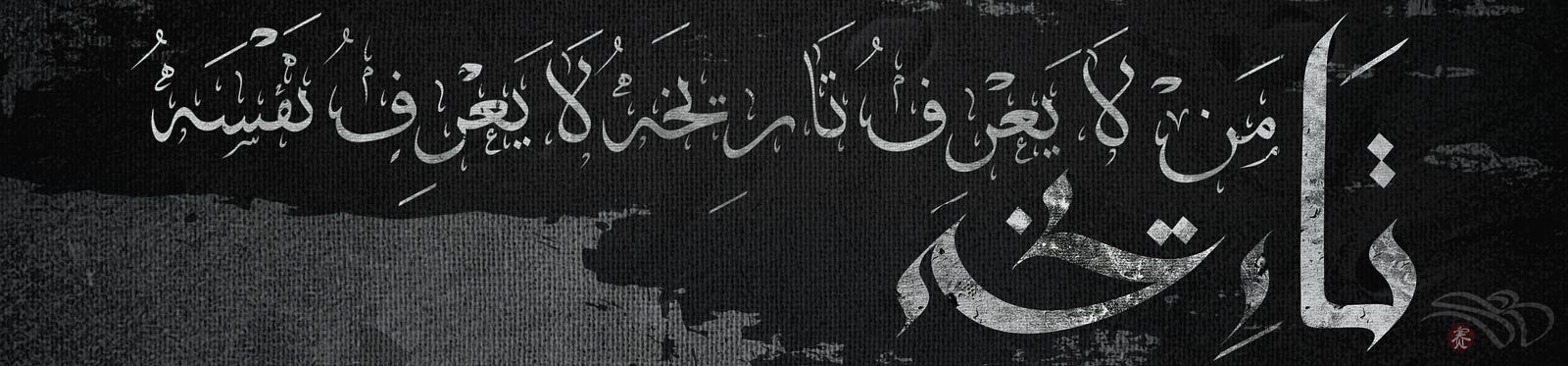
مَنْ لَا يَعْرِفُ تَارِيخَهُ لَا يَعْرِفُ نَفْسَهُ
He who does not know his history does not know himself.
I was dreading the Fourth of July this year. I had decided not to write about it on the actual day. The thought of doing so left me frustrated and exhausted before I even began. I needed time to feel my feelings, to truly acknowledge what the day actually stirred before I could put it into words. So when the day arrived, I mounted my camera to my car and recorded the unedited celebration on the streets. I drove through Chicago, from the city into the suburbs, downtown onto Lake Shore Drive, up through the Northside all the way to Skokie, and then to the west side. What I witnessed forced me to put words to something that too many people feel alone in thinking. I needed to give my own mind rest, and I knew others needed to see that they were not the only ones looking at the spectacle and feeling the same weight I felt.
I expected white people to gather downtown as they always do. I did not expect the sheer number of Black people, Latinos, and Muslims who were out in the streets, in the parks, on the sidewalks, lighting fireworks, waving flags, and performing joy with a fullness that felt both familiar and deeply wrong. I should not have been surprised. This year was not different from previous years. BIPOC communities have celebrated this holiday for a long time. My expectation had shifted because of the growing recognition of Juneteenth and because I had noticed less of the early, pre-holiday fireworks. If you’ve lived in Chicago you know that it’s not uncommon to hear and see fireworks everyday from May to August. This year was different. The weather had been stormy, raining off and on even on the day itself, which likely dampened the premature explosions. The circumstances fooled me into thinking something had changed. But driving through neighborhood after neighborhood made it clear that many people were celebrating with a blissful ignorance, as if they actually had something in this holiday that belonged to them.
For those celebrating, ignorance truly functioned as a kind of bliss. Now I’m only going to be focusing on the three non-white groups I saw in the greatest numbers due to my proximity to them: Black people, Latinos, and Muslims. These are three of the most oppressed and marginalized groups in the United States, and each of them arrived at that position through a distinct history of conquest, exclusion, and violence. Their participation in this particular celebration demands an honest analysis, one that explains not just what I saw but the forces that produced it.
Black people are the most oppressed group in America by any honest measure. Black people occupy a specific and foundational place in the history of this country. America exists, in the most literal economic and political sense, because of the enslavement of Black people. The wealth of the plantation South, the capital that financed early American banking and insurance, and the infrastructure of entire cities including the capital building and universities were built by stolen labor extracted through violence. The history of Black people in this country is a long and horrific one.
This nation was built on the systemic and systematic oppression of Black people. It still operates on that foundation and still benefits from it today. Some people are ignorant of that fact. Some are in denial. Some choose to ignore it. But the person who is fully aware, who refuses to make excuses, who acknowledges the truth and speaks it without flinching, does not celebrate the Fourth of July. They refuse because they know what the holiday stood for then and what it still stands for now. They know their history. A person who knows their history, who understands their environment, their society, the advantages and disadvantages they face, and the power structure they live within, is much harder to manipulate. That knowledge is a form of protection. Its absence leaves a person vulnerable to every lie the system offers.
The Fourth of July was, for generations, a day of protest for Black people in America. Black people knew very well that the holiday was not for them. They were not seen as American, and the celebration had nothing to do with their freedom. In fact, Black people were often attacked and killed on the Fourth of July. The so-called patriotic white American used the holiday as another excuse to terrorize Black people. So the Fourth of July became a day to protest, and July 5th became the day to celebrate. That was the tradition. That was the clear-eyed response to a nation that declared its own liberty while tightening the chains on millions of enslaved Africans.
The fifth of July is the anniversary of Frederick Douglass delivering his speech, “What to the Slave Is the Fourth of July?” in Rochester, New York, in 1852. He was invited to speak on the Fourth but chose the fifth, a deliberate act. He stood before that audience and refused to participate in the fiction that the day meant freedom for all. He said, “This Fourth of July is yours, not mine. You may rejoice, I must mourn.” He told them the sunlight that brought light and healing to them had brought stripes and death to the people he represented. He did not soften those words. He did not make them palatable. He laid out the hypocrisy of a nation that boasted of liberty while holding human beings in bondage. He described the internal slave trade, the auction blocks, the separation of families, the whips and chains, the Fugitive Slave Law, and the churches that blessed it all. He called the celebration a sham, the boasted liberty an unholy license, and the shouts of equality a hollow mockery. He spoke not to persuade with gentle argument but to scorch with irony and rebuke, because the time for gentle argument had long passed. He said, “At a time like this, scorching irony, not convincing argument, is needed. O! had I the ability, and could I reach the nation’s ear, I would, to-day, pour out a fiery stream of biting ridicule, blasting reproach, withering sarcasm, and stern rebuke. For it is not light that is needed, but fire; it is not the gentle shower, but thunder.”
Douglass knew that the condition of the Black person in America exposed the entire national mythology as a lie. He knew that the Declaration of Independence, with its pronouncements about all men being created equal, was a document whose principles were denied to the very people who had been stolen and forced to build the country. He pointed to the fact that while Americans wept for the oppressed of Hungary and Ireland, they enforced a strict silence about the ten thousand wrongs of the American slave. He said, “You are all on fire at the mention of liberty for France or for Ireland; but are as cold as an iceberg at the thought of liberty for the enslaved of America.” That contradiction is not a relic of the past. It is the same mechanism operating today, repackaged but unchanged in its essence.
The tradition Douglass spoke from did not disappear because Black people forgot how to fight or lost the will to resist. It stopped being practiced widely because the political infrastructure built to sustain it was deliberately destroyed, and because fear became the dominant inheritance passed down to the generations that followed. That destruction has a documented history, and it deserves to be told plainly.
By the late 1960s, the Black Panther Party had built free breakfast programs, community health clinics, and organized self-defense chapters in dozens of cities, Chicago among them. The federal government responded with COINTELPRO, the FBI’s counterintelligence program. Internal FBI memos stated its purpose directly: to prevent the rise of what the bureau called a Black messiah, and to disrupt, discredit, and destroy Black political organizing by any means available. Agents infiltrated these organizations with informants. They forged letters to turn allies against each other. They fed false intelligence to local police departments to manufacture conflict between groups that should have been working together. On December 4, 1969, Chicago police raided the apartment of Fred Hampton, the twenty-one-year-old chairman of the Illinois Black Panther Party, using a floor plan supplied by an FBI informant who had been embedded inside the party for months. They shot him dead in his bed while he slept beside his pregnant fiancée. He was killed here, in this city, on the same streets I drove down with my camera fifty-six years later. His family won a civil settlement afterward. No officer was ever convicted of his murder. This is not a distant or contested piece of history. The government has admitted to it.
The destruction did not stop with Hampton or the party’s most visible leaders. Through the 1970s and into the 1980s, the government allowed drugs and weapons to move into Black neighborhoods at the exact moment those neighborhoods had lost the organized political leadership that could have resisted it. The CIA worked with and protected known drug traffickers connected to the Nicaraguan Contras throughout the 1980s. Cocaine moved into American cities, including South Central Los Angeles, in historic volume during that same period. Congressional investigations and the CIA’s own Inspector General later confirmed the agency’s knowledge of these networks and its failure to act against them for years. The government that had just spent a decade assassinating and imprisoning Black political leadership then helped narcotics and firearms flood the communities that leadership had organized. Sentencing laws punished crack cocaine, the form of the drug that reached Black neighborhoods, one hundred times more harshly than the powder form more common in white ones. Prison became the next tool. A generation of Black men were removed from their families and their communities for participating in an economy the government itself allowed to exist in the first place.
None of this required every Black person to personally witness a raid or bury a relative to feel its effect. A population does not need every person within it to be touched directly by state violence in order to be controlled by it. It only needs enough visible examples, delivered consistently enough over time, that resistance itself comes to look like a decision that ends in death, prison, or the destruction of your family. I’m explaining this because simply calling the result submission, without explaining what produced it, repeats the same erasure the government was counting on. It blames the people who were targeted instead of naming the people and institutions that targeted them. The fear that grew out of COINTELPRO, the assassinations, and the drug and prison years became something that got passed down without anyone needing to explain where it came from. Parents who had lived through it, or who had buried people who lived through it, taught their children to keep their heads down, to avoid drawing attention, to stay out of anything that looked like organizing. That was a survival technique. The instruction came from love and from experience. It was also exactly the outcome the government had spent decades working to produce.
Integration compounded the damage. When Black children gained the legal right to attend white-controlled schools, the country did not integrate Black teachers, Black principals, and Black-controlled curricula into that system. It dismantled them instead. Thousands of Black educators lost their jobs in the years following school desegregation as districts closed Black schools and folded their students into white schools run by white administrations that had no interest in teaching what those communities had just survived. The responsibility for teaching Black history passed from people who had lived it to an institution that had spent centuries denying it happened at all. White-controlled schools do not teach Black history in any meaningful depth. They mention a handful of sanitized facts during Black History Month and move on. They do not teach the reality of what was done, how it was done, or how it continues today. They do not teach children to understand the structures of power that shape their lives. So the generation that came after the Panthers knew less than the generation before it, and the generation after that knew even less than the one before that. The tradition of protest on the Fourth of July faded. The knowledge that July 5th was the real day of commemoration disappeared from common memory. Now you have Black people out in the streets lighting fireworks, celebrating a holiday that was never theirs, with no understanding of what they are doing or why they are doing it.
What I saw here in Chicago was not just a failure of memory. It was a demonstration of how completely a people can be conditioned to adopt the symbols of their own repression. Fireworks are explosives. They are built from gunpowder and designed to replicate the sound and light of artillery and weapons fire. The United States is a nation founded through violence, expanded through violence, and maintained through violence, and that same violence has been directed at Black neighborhoods through militarized policing, SWAT raids modeled on combat tactics, and a prison system that treats entire zip codes as territory to be controlled rather than communities to be served. To set off explosives in the sky while celebrating freedom, without knowing any of this history, is to perform loyalty to the same system that has spent centuries treating you as a threat to be contained.
I drove through Humboldt Park, the heart of Chicago’s Puerto Rican community, and through the neighborhoods where Mexican families live. They were in the parks, in the streets, setting off fireworks, partying, celebrating. Latinos are also an oppressed and marginalized group in this country, and their relationship to American nationalism runs through a history that most people are never taught.
Nearly half of Mexico’s territory became American soil in 1848, at the end of a war the United States fought in part to expand the territory available to slaveholders. What is now California, Texas, Arizona, New Mexico, Nevada, Utah, and parts of several other states belonged to Mexico before that war. The Mexican families living on that land did not cross a border to get here. The border moved and crossed them instead, and the promises made to protect their property and citizenship rights under the treaty that ended the war were violated repeatedly in the decades that followed, as courts and land commissions stripped Mexican landowners of property through legal processes designed to favor white settlers.
Puerto Rico’s relationship to the United States is even more direct, and it continues in the present tense. The United States took Puerto Rico from Spain in 1898 as a territory won through war, not as a partner in any agreement Puerto Ricans themselves consented to. Puerto Ricans were granted United States citizenship in 1917, one month before the United States entered the First World War, which made them eligible for the draft. Puerto Rican men were sent to fight and die in a war for a country that would not let them vote for the president who declared it. That arrangement has never changed. Puerto Rico remains an unincorporated territory of the United States today. Puerto Ricans are United States citizens who cannot vote in presidential elections while they live on the island, and the island has no voting representation in Congress, the body that writes the laws Puerto Rico is required to follow. The United States controls Puerto Rico’s trade, its currency, its borders, and its finances, while the people living under that control have no meaningful say in how it is exercised.
The neglect that comes with that arrangement is not a thing of the past. In 2017, Hurricane Maria devastated Puerto Rico and killed an estimated three thousand people, most of them in the months after the storm from the collapse of the island’s power grid, medical system, and infrastructure. The federal government’s official death count stood at sixty four for months afterward, a number so far from reality that it took an independent study, commissioned only after public pressure, to establish anything close to the true toll. Federal aid arrived slowly and in amounts that independent analyses later found were smaller than the aid sent to Texas and Florida after comparable disasters that same year, states with far larger populations of voters who could hold elected officials accountable at the ballot box. Puerto Rico has also been placed under a federally imposed fiscal oversight board with the power to override decisions made by Puerto Rico’s own elected government, a board Puerto Ricans did not choose and cannot vote out. A colony is a place governed by a power its people did not choose and cannot remove. That is what Puerto Rico is, and it is what it has been for over a century.
The same failure to transmit history that operates in Black communities operates here as well, but it runs on a different fear. For Mexican and Central American communities in particular, the fear is that studying your own history of conquest and dispossession too closely will draw attention, and that visible political consciousness could get you or someone in your family flagged, watched, or deported in a country where immigration status can define whether a family stays together. Not to mention the constant ICE raids in these communities. So the flag gets waved instead. The performance of loyalty becomes a form of protection, purchased at the cost of understanding why that protection is needed at all.
I drove through Little India on Devon Avenue. That neighborhood is home to a large Muslim population. It’s always lively, always busy, the restaurants are packed, and people are out at all hours. But on the Fourth of July, I saw something I had not seen there before in that neighborhood. I saw American flags, red white and blue lights and decorations, women in full hijab taking photos in front of flags, fireworks going off block after block.
This is a community that has lived under a specific and well documented form of government suspicion for the last twenty five years. The PATRIOT Act, passed weeks after September 11, 2001, expanded government surveillance power in ways that treated Muslim Americans as a population to be monitored rather than a population to be protected. The New York Police Department ran a secret surveillance program for years that mapped mosques, Muslim student associations, and Muslim owned businesses across the Northeast, treating ordinary religious practice and community life as intelligence to be collected. That program was only exposed through investigative reporting and shut down after lawsuits forced the city to end it. Thousands of Muslim Americans have spent years placed on secret government watchlists with no way to see the evidence used against them and no clear way to get their names removed. In 2017, the federal government restricted travel into the United States from a list of countries that were overwhelmingly majority Muslim, and the Supreme Court allowed a modified version of that restriction to stand. Hate crimes against Muslims, and against anyone perceived to be Muslim, rise every time a news cycle touches the Middle East. The first person killed in a hate crime after September 11 was not even Muslim. He was Balbir Singh Sodhi, a Sikh gas station owner in Arizona, murdered because his turban resembled what the news had spent days telling his killer to fear. Even today, the average Muslim can’t go through the airport wearing a kufi without being “randomly” searched.
To wave the flag under that much documented suspicion is not confusion. It is the same instinct running through every group I have described, the hope that visible loyalty will finally be recognized as belonging, in spite of twenty five years of evidence that says otherwise.
I have to acknowledge that the histories I’ve touched on for the Latino and Muslim communities only scratch the surface of what each has endured inside this country. Those full histories deserve their own essays, their own depth, and their own time. I raised them here because silence felt like its own failure, and because the pattern they share with Black American history is the point. That pattern has a name.
I call it Americanization. (I wrote about this in length here). It’s the process by which a person living inside the oppressive American system absorbs that system’s values, its rituals, and its self justifying stories as a condition of getting through daily life inside it. This is not a personal failing, and it is not a sign of weakness in any individual. It is a predictable outcome of a system built to produce compliance. Schools, media, and the economic structure all work together to manufacture consent. They teach a person to love the flag, to see military violence as heroism, and to believe that the problems in their life come from their own shortcomings rather than from the structure around them. W. E. B. Du Bois described an early version of this over a century ago as double consciousness, the constant experience of seeing yourself through the eyes of a country that has never fully recognized you as belonging to it while also trying to hold onto a sense of yourself that exists outside that judgment. Americanization takes that split condition and collapses it into one. The view imposed from the outside becomes the only view a person has left of themselves. The most effective form of control is the kind the controlled person does not experience as control at all. When a Black person, a Latino person, or a Muslim person celebrates the Fourth of July without knowing what it cost their own community to be excluded from what the holiday claims to represent, they are not making a statement of inclusion. They are showing that the system succeeded in shaping how they understand themselves.
Douglass understood this mechanism a century and a half before it had a name. He knew that a person who had been made to forget their own history, their own language, and their own claim to their own humanity would be easier to govern and harder to organize. The mechanisms of control are no longer physical for most people reading this, but they operate just as effectively through curriculum, through fear, and through the slow interruption of what one generation is able to pass to the next. That interruption causes real and lasting damage, and it does not correct itself, because most people carrying its effects were never taught to recognize what happened to them in the first place.
Some people will say that I am overthinking, that people just want to have a good time, that a barbecue and some fireworks do not mean anything deep. That response is itself a symptom of the problem. The refusal to examine meaning, the insistence that everything is just harmless fun, is how the system protects itself from scrutiny. If you can be convinced that your actions have no significance, you will never question what those actions represent. The people who attacked and killed Black Americans on the Fourth of July in the 19th and early 20th centuries also thought they were just having a good time. Their celebration was built on terror. The structure of the holiday has not changed. The violence has changed shape, but the underlying mythology remains the same. To ignore all of this is not a simple choice of comfort over truth. What looks like comfort is actually a state of being comfortably uncomfortable. It is the false ease that comes from refusing to address a problem because addressing it would force you to confront how bad things really are, and that confrontation is frightening. So you stay in a middle zone where you are not truly at peace but you are also not actively struggling for change. You trade the possibility of genuine comfort, the kind that would come if the conditions of your life actually improved, for a pretend version of it that requires you to look away from what makes you uneasy. That trade is never a fair one. You are giving up the only path to real rest in exchange for a restless performance of calmness. The system benefits from that trade every single time you make it.
I said I would not write about the Fourth of July right now, but here I am writing because I know I am not the only one who watched those same streets and felt something sour in my stomach. Your perception is not wrong. The confusion you feel watching your own people wave the flag of a nation that has never fully claimed them is not a sign that you are missing something. It is a sign that you are still awake. Hold onto that.
The work of remembering is a daily discipline, and it does not happen by accident. Read Frederick Douglass’s speech in full. I have linked it below. His words will strip away the false comfort you have been taught to feel about this holiday and replace it with the truth you already sensed standing in the middle of it. Understand that the Fourth of July was a day of protest, and that July 5th is the anniversary of a truth told without a single word softened for the comfort of the room. That tradition can be reclaimed. The transmission of history can be restored. But it will not happen by accident. It will only happen when enough people decide that the bliss of forgetting has become too expensive, and that consciousness, however heavy it is to carry, is the only inheritance worth passing on.
Read Frederick Douglass’s full 1852 speech, “What to the Slave Is the Fourth of July?”
Author’s Note
My name is Saipher Zureti. I am a visual artist and writer. All of the calligraphy in my essays is my original artwork, created specifically for the writing it accompanies.
This Substack is a body of philosophical essays on manipulation, identity, psychology, and the systems that shape how we see ourselves and each other. The essays build on each other deliberately. Each one extends, complicates, or deepens what came before, because these subjects cannot be understood in isolation from one another.
If you want to continue reading and thinking through these systems with me, please subscribe. Thank you for being here.
Until next time, Namaste.